English
 中文简体
中文简体
Oct 20,2026
Content
- 1 What Vinyl Sheet Piles Are and How They Are Made
- 2 Key Advantages Over Steel and Concrete Alternatives
- 3 Profile Types and Structural Performance
- 4 Material Grades and PVC Compound Quality
- 5 Appropriate Applications and Load Limitations
- 6 Installation Methods and Key Considerations
- 7 Long-Term Performance and When to Specify Vinyl Over Steel
Vinyl sheet piles have become one of the most widely adopted materials in waterfront construction, shoreline protection, flood control, and light retaining wall applications over the past three decades. Once viewed as a niche alternative to steel or concrete sheet piling, modern vinyl sheet piles have earned mainstream acceptance among civil engineers, marine contractors, and landscape professionals who need a corrosion-resistant, cost-effective, and long-lasting solution for earth and water retention. However, vinyl sheet piles are not a universal solution — they have specific strengths, clearly defined load limitations, and installation requirements that differ significantly from traditional piling materials. This article provides a comprehensive, practical guide to understanding vinyl sheet pile technology, available profiles and grades, appropriate applications, and the key factors that determine whether they are the right choice for a given project.
What Vinyl Sheet Piles Are and How They Are Made
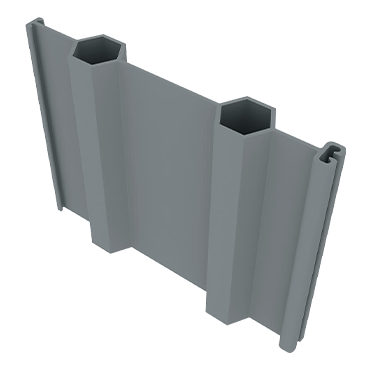
Vinyl sheet piles are structural sections extruded from polyvinyl chloride (PVC) compound formulations that include UV stabilizers, impact modifiers, heat stabilizers, and processing aids specifically engineered for structural outdoor use. The base PVC resin is compounded with these additives to achieve a balance of stiffness, impact resistance, and long-term weathering performance that general-purpose PVC materials cannot deliver. The resulting compound is extruded through precision dies under high temperature and pressure to produce continuous sections with the complex cross-sectional profiles — Z-shapes, C-shapes, arch profiles, and flat combi profiles — that give sheet piles their structural efficiency.
The interlocking mechanism is a critical design element of any sheet pile system. Vinyl sheet piles use tongue-and-groove or ball-and-socket interlocks that are extruded integrally as part of the section profile. These interlocks allow adjacent piles to be driven and connected in a continuous wall, transferring shear forces between sections and creating a barrier against soil and water migration. The quality of the interlock — specifically its dimensional precision and the tightness of the fit between mating sections — directly affects the wall's water-tightness and its ability to distribute lateral loads across the full panel width. Premium manufacturers produce interlocks with consistent tolerances that maintain tight engagement even after installation in difficult ground conditions.
Key Advantages Over Steel and Concrete Alternatives
The growing adoption of vinyl sheet piles is driven by a set of genuine performance advantages in specific environments where steel and concrete struggle. Understanding these advantages clearly — and their limits — is essential to making an informed material selection decision.
- Corrosion immunity: This is the defining advantage of vinyl over steel in marine and waterfront applications. Steel sheet piles in saltwater, brackish water, or chemically contaminated soil environments corrode aggressively, requiring protective coatings, cathodic protection systems, and periodic maintenance to achieve their design service life. Vinyl is inherently immune to electrochemical corrosion, biological attack from marine organisms, and chemical degradation from the acids, chlorides, and sulfates commonly found in coastal and industrial soils. A properly installed vinyl sheet pile wall in a marine environment will perform without corrosion-related degradation for 50 years or more — a service life that steel simply cannot match in the same conditions without substantial protective investment.
- Lower installed cost in light to medium applications: Vinyl sheet piles are lighter than steel sections of comparable height, reducing handling equipment requirements and installation time. For residential seawalls, canal bulkheads, small retaining walls, and landscape retention applications, vinyl systems are typically 20–40% less expensive on a fully installed basis compared to steel alternatives, when the elimination of corrosion protection costs is factored into the comparison.
- Minimal maintenance requirements: Once installed, vinyl sheet pile walls require virtually no routine maintenance. There is no painting, no coating inspection, no cathodic protection system to monitor, and no rust remediation. This zero-maintenance characteristic is particularly valuable for municipal and homeowner association projects where long-term maintenance budgets are limited or unpredictable.
- Ease of handling and cutting: Vinyl sections can be cut with standard woodworking saws, drilled with conventional bits, and handled without heavy lifting equipment in shorter lengths. This reduces installation costs significantly for projects in locations with restricted access — narrow waterways, residential properties with limited equipment access, or sites where crane deployment is impractical.
- Aesthetic options: Vinyl sheet piles are available in a range of colors — most commonly tan, gray, and brown — and can be produced with wood-grain or stone-texture surface finishes that provide a more visually appealing appearance than bare steel or concrete in residential and recreational waterfront settings.
Profile Types and Structural Performance
Vinyl sheet piles are manufactured in several distinct profile geometries, each designed to deliver specific combinations of section modulus (bending stiffness), wall thickness, and interlock strength. Selecting the correct profile for the project's load conditions is the most critical engineering decision in vinyl sheet pile wall design.
Z-Profile Sheet Piles
Z-profiles are the most structurally efficient vinyl sheet pile geometry for cantilever and anchored retaining wall applications. The Z-shape places the maximum amount of material at the greatest distance from the neutral axis, maximizing the section modulus per unit of material weight — the same structural principle used in steel Z-piles. Z-profile vinyl sheet piles are used for seawalls, riverbank protection, canal bulkheads, and retaining walls where the section must resist significant lateral earth and hydrostatic pressure. They are available in a range of section heights typically from 8 inches to 18 inches, with section moduli ranging from approximately 10 in³/ft to over 60 in³/ft depending on the manufacturer and specific profile designation.
U-Profile and C-Profile Sheet Piles
U and C-profiles provide moderate structural performance and are commonly used for lighter retaining applications, landscape walls, garden borders, and temporary erosion protection where the load demands are lower than typical seawall or bulkhead conditions. These profiles are generally less expensive than Z-profiles and are frequently used in non-structural or light-structural applications where their lower section modulus is adequate for the design conditions. They are also used as infill sections between H-pile or soldier pile frames in combined wall systems.
Flat and Combi Profile Sheet Piles
Flat profiles are used primarily as closure sections in cofferdam construction and as cap elements in decorative or light retaining applications. Combi systems combine vinyl sheet pile infill panels with steel H-pile or pipe pile primary elements, using the vinyl sections to span between the structural steel supports. This approach extends the practical application range of vinyl beyond what the vinyl sections alone could carry, making combi systems a cost-effective solution for medium-duty bulkheads and seawalls where the corrosion resistance of vinyl is desired but the loads exceed the capacity of an all-vinyl cantilever wall.
Material Grades and PVC Compound Quality
Not all vinyl sheet piles are manufactured to the same material standard, and the difference between a high-quality structural compound and a substandard PVC formulation can mean the difference between a 50-year service life and a wall that becomes brittle and fails within a decade. The key material properties to evaluate when specifying or sourcing vinyl sheet piles are summarized in the table below.
| Property | Minimum Requirement | Test Standard | Why It Matters |
| Tensile Strength | ≥ 6,000 psi | ASTM D638 | Governs resistance to bending under lateral load |
| Flexural Modulus | ≥ 400,000 psi | ASTM D790 | Determines wall stiffness and deflection under load |
| Izod Impact Strength | ≥ 10 ft-lb/in (notched) | ASTM D256 | Resistance to brittle fracture during installation |
| UV Resistance (Weathering) | Retain ≥ 80% impact after 2,000 hrs Xenon arc | ASTM G155 | Long-term performance in exposed outdoor applications |
| Cell Classification | 12454 or 13354 minimum | ASTM D1784 | Baseline compound quality classification for rigid PVC |
The ASTM D1784 cell classification system is particularly important as a baseline quality indicator. A cell class of 12454 indicates a PVC compound with minimum tensile strength of 6,000 psi, minimum flexural modulus of 400,000 psi, and specific impact and chemical resistance requirements. Reputable manufacturers of structural vinyl sheet piles will readily provide certified test data confirming compliance with these material standards. Buyers should be cautious of products offered at significantly below-market prices without accompanying material certification — the cost saving almost always reflects a lower-grade PVC compound that will underperform structurally and degrade prematurely in service.
Appropriate Applications and Load Limitations
Vinyl sheet piles are an excellent solution for a well-defined range of applications, but it is equally important to understand where they are not appropriate. Misapplication — specifying vinyl where the loads or conditions exceed the material's capabilities — leads to project failures that damage the reputation of the technology as a whole.
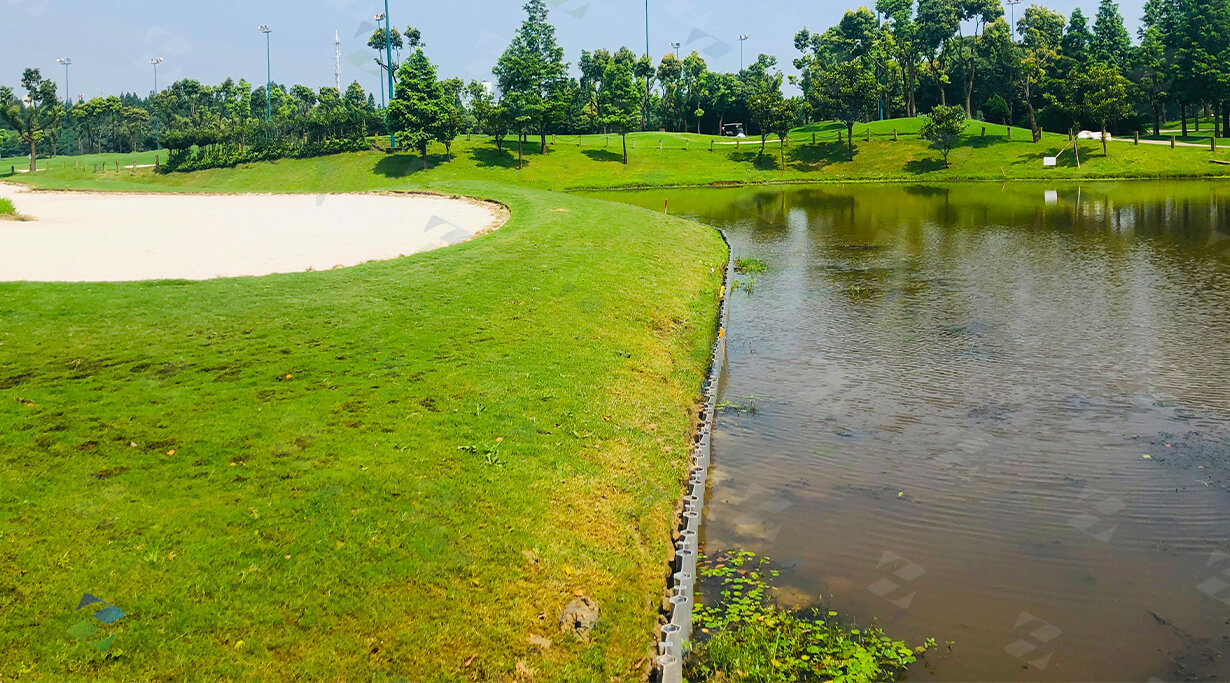
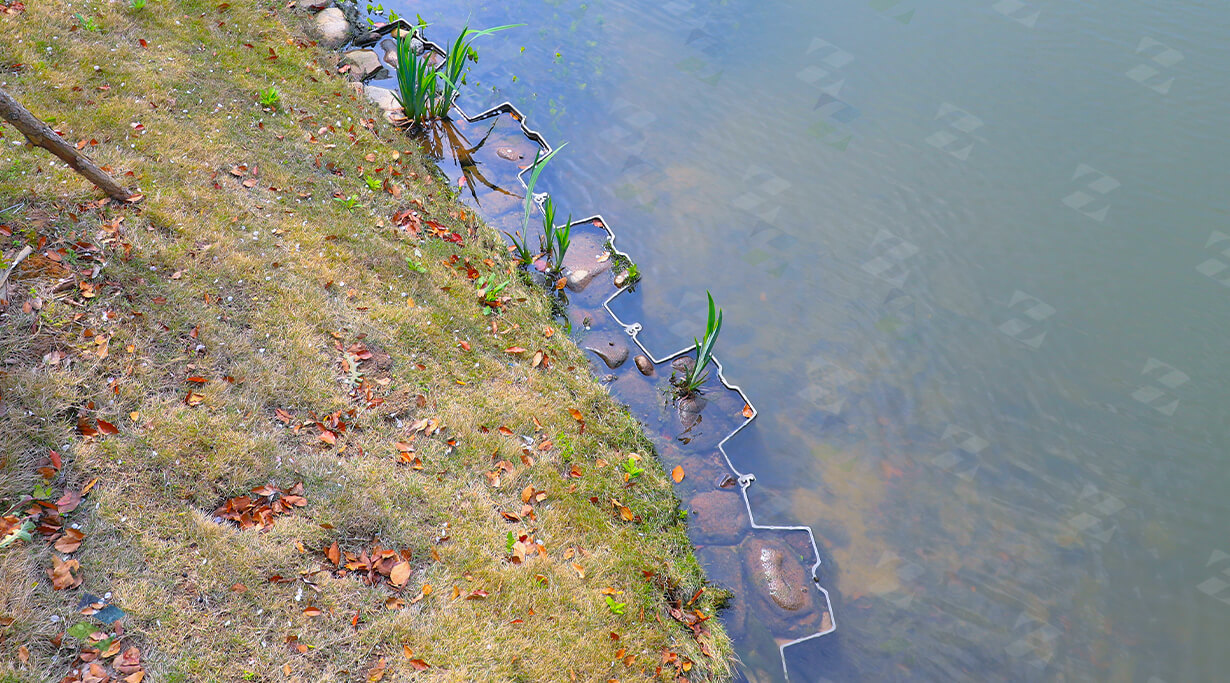
Vinyl sheet piles are well suited for residential and light commercial seawalls and bulkheads up to approximately 8–12 feet of retained height (depending on soil and water conditions), canal and marina bulkheads in low to moderate wave energy environments, flood barrier walls and levee protection in areas without extreme hydraulic loading, erosion control along riverbanks and drainage channels, landscape retaining walls and garden borders, and temporary cofferdams for utility construction in soft soils. They are not appropriate for high-load applications including port and harbor structures subject to vessel impact and mooring loads, heavily surcharged retaining walls adjacent to roadways or buildings with significant live loads, walls in seismically active zones where ductility and energy absorption are critical design requirements, or any application requiring embedded depths exceeding approximately 20 feet in hard soils or rock, where the driving resistance exceeds the pile's structural capacity.
Installation Methods and Key Considerations
The installation of vinyl sheet piles follows the same general sequence as steel sheet piling — sections are driven into the ground using vibratory hammers, hydraulic push-in methods, or in soft soils, by water jetting — but the lower stiffness and impact sensitivity of PVC requires specific adaptations to avoid damaging the sections during installation.
- Vibratory hammer selection: Low-frequency, high-amplitude vibratory hammers are preferred for vinyl sheet pile installation because they transmit energy more gently than high-frequency hammers. The driving adapter must be custom-fabricated or specifically designed for the vinyl pile profile to distribute the driving force evenly across the full width of the pile head without stress concentrations that could split or crush the section.
- Pre-drilling in hard soils: Vinyl sheet piles cannot be impact-driven into dense gravel, hard clay, or soils containing obstructions without risk of section damage. In these conditions, pre-drilling or pre-jetting the drive path is necessary to reduce driving resistance to levels compatible with vinyl's structural limits. Attempting to force vinyl piles through hard soils without pre-treatment almost always results in interlock damage, section splitting, or pile deviation.
- Temperature considerations: PVC becomes more brittle at low temperatures. Installation of vinyl sheet piles should be avoided when air temperatures are below approximately 40°F (4°C), as the impact resistance of the material decreases significantly in cold conditions, increasing the risk of brittle fracture during driving. In climates where winter installation is unavoidable, sections should be stored in a heated environment until immediately before installation.
- Alignment and interlock engagement: Maintaining continuous interlock engagement throughout the driving sequence is critical to wall integrity. Each pile should be checked for plumb alignment as it is driven, and the interlock with the adjacent previously installed pile should be verified to be fully engaged before proceeding. Disengaged interlocks create gaps in the wall that allow soil and water migration and significantly reduce the wall's lateral load capacity.
- Capping and anchorage: For walls above approximately 6 feet of retained height, a horizontal cap beam — typically fabricated from treated timber, aluminum extrusion, or cast-in-place concrete — is installed along the top of the piles to distribute horizontal loads and tie the wall together. Tiebacks or deadman anchors at mid-height may be required for taller walls to reduce bending moments to within the section's allowable range.
Long-Term Performance and When to Specify Vinyl Over Steel
Field performance data accumulated over 30 years of vinyl sheet pile installation consistently confirms that properly specified and installed vinyl walls in marine environments outlast equivalent steel walls without corrosion protection by a significant margin. Studies of vinyl seawalls installed in the 1990s in Florida, the Gulf Coast, and the Chesapeake Bay region show that walls remain structurally sound and aesthetically acceptable after 25–30 years of continuous saltwater exposure — a service life that would require multiple rounds of costly maintenance to achieve with bare steel.
The decision to specify vinyl over steel should be driven by a systematic evaluation of project conditions rather than cost alone. Vinyl is the preferred choice when the retained height is within vinyl's structural range, the environment is corrosive to steel (saltwater, brackish water, acidic or sulfate-rich soils), long-term maintenance access is limited or expensive, and the project budget favors lower total lifecycle cost over lower initial material cost. Steel remains necessary when retained heights, surcharge loads, seismic demands, or vessel impact loads exceed what vinyl can structurally accommodate. For the large category of residential, municipal, and light commercial waterfront and erosion control projects that fall within vinyl's capability range, it represents a technically sound and economically compelling solution that deserves serious consideration in every project specification process.