English
 中文简体
中文简体
Oct 01,2026
Content
- 1 What Are Vinyl Sheet Piles and How Are They Made?
- 2 Key Advantages of Vinyl Sheet Piles Over Steel and Timber
- 3 Common Profile Types and Their Structural Characteristics
- 4 Where Vinyl Sheet Piles Are and Are Not Appropriate
- 5 Installation Methods for Vinyl Sheet Piles
- 6 Critical Details for a Durable, High-Quality Installation
- 7 Long-Term Performance and Maintenance Expectations
What Are Vinyl Sheet Piles and How Are They Made?
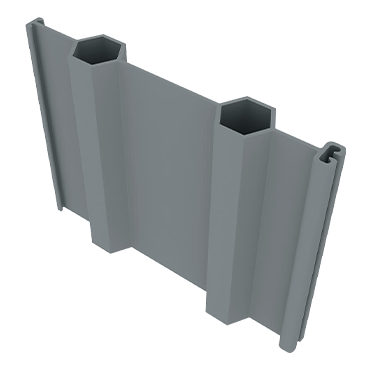
Vinyl sheet piles are interlocking structural panels manufactured from rigid polyvinyl chloride (PVC) compound, designed to be driven or pressed into soil to form continuous walls for retaining earth, controlling water, or protecting shorelines. Unlike wood or steel sheet piling, vinyl sheet piles are extruded as a single homogeneous section with no joints, welds, or laminations within the profile itself — the PVC compound is forced under heat and pressure through a precision die to produce a consistent cross-section along the full length of each pile. The interlocking system is formed as an integral part of the extrusion, creating tongue-and-groove or ball-and-socket connections at the edges that allow adjacent piles to be threaded together on site to form a continuous, structurally interconnected wall.
The PVC compound used in quality vinyl sheet piling is formulated with UV stabilizers, impact modifiers, and heat stabilizers to ensure long-term performance in exposed environmental conditions. The specific compounding recipe has a direct impact on durability — piles manufactured with insufficient UV stabilization will become brittle and chalky within a few years of sun exposure, while properly formulated material maintains its mechanical properties and surface integrity for 50 years or more. Reputable manufacturers provide documented compound specifications and third-party test data confirming compliance with relevant material standards such as ASTM D4216 in North America.
Key Advantages of Vinyl Sheet Piles Over Steel and Timber
Vinyl sheet piling has captured a substantial share of the sheet pile market in marine, waterfront, and light retaining wall applications over the past three decades, displacing both traditional timber and steel alternatives in many project types. The reasons are practical and financially quantifiable rather than simply preferential.
- Corrosion immunity: Steel sheet piling corrodes in marine, brackish, and chemically contaminated environments, requiring expensive protective coatings, cathodic protection systems, and eventual replacement. Vinyl sheet piles are completely immune to electrochemical corrosion and are unaffected by salt water, fresh water, acid soils, and most industrial effluents, eliminating these lifecycle costs entirely.
- Biological resistance: Timber sheet piling in marine environments is subject to attack by boring organisms — specifically Teredo navalis (shipworm) and Limnoria (gribble) — which can reduce untreated timber piling to a structurally useless shell within 3 to 5 years. Vinyl provides no nutritional substrate for biological attack and is unaffected by marine borers, fungi, or bacteria.
- Low maintenance: Once installed, a properly specified vinyl sheet pile wall requires essentially no maintenance over its service life beyond periodic visual inspection. There is no painting, no re-treatment, no sacrificial anode replacement, and no section loss monitoring required — all of which are ongoing cost commitments with steel alternatives.
- Lighter weight and easier handling: Vinyl sheet piles weigh significantly less than steel sections of equivalent length, reducing the equipment requirements and labor costs associated with transportation, site handling, and installation. Smaller sections can often be installed by a two-person crew using compact equipment rather than requiring heavy piling rigs.
- No environmental leaching: Steel piling releases iron and potentially other alloying elements into the surrounding environment as it corrodes; treated timber releases preservative chemicals. Vinyl sheet piles are chemically inert in service and release no contaminants into soil or water, making them the preferred choice for environmentally sensitive installations near wetlands, fisheries, and drinking water catchments.
Common Profile Types and Their Structural Characteristics
Vinyl sheet piles are manufactured in several distinct cross-sectional profiles, each offering a different balance of section modulus, wall width per pile, and moment of inertia. The profile selection is a structural engineering decision based on the lateral earth pressure or hydraulic load the wall must resist at the required embedment depth.
| Profile Type | Typical Width | Section Modulus Range | Primary Application |
| Flat / Straight Web | 300–600 mm | Low | Seepage cutoff, light landscaping walls |
| Z-Profile | 400–600 mm | Medium–High | Retaining walls, bulkheads, seawalls |
| U / Omega Profile | 500–700 mm | Medium | Waterfront walls, flood barriers |
| Arch / Corrugated | 300–500 mm | Medium | Erosion control, channel lining |
| Box / I-Profile (composite) | Varies | Very High | Heavy-duty retaining, deep walls |
The Z-profile is the most widely specified vinyl sheet pile profile for structural retaining and bulkhead applications because its geometry maximizes the distance between the neutral axis and the extreme fiber of the section, producing a high section modulus relative to the amount of PVC material used. For very high load applications where a single vinyl profile cannot provide sufficient section modulus, composite systems can be used in which two or more vinyl piles are assembled into a box or king pile configuration that behaves as a single high-capacity structural element.
Where Vinyl Sheet Piles Are and Are Not Appropriate
Understanding the application boundaries of vinyl sheet piling is as important as understanding its advantages. Specifying vinyl in conditions that exceed its structural or thermal limits results in poor performance and project failure, while avoiding vinyl in applications where it is entirely suitable means missing out on its substantial lifecycle cost advantages.
Applications Where Vinyl Sheet Piles Excel
- Marine bulkheads and boat docks: The combination of corrosion immunity and biological resistance makes vinyl the dominant material for residential and light commercial waterfront walls, dock faces, and marina infrastructure in salt and brackish water environments.
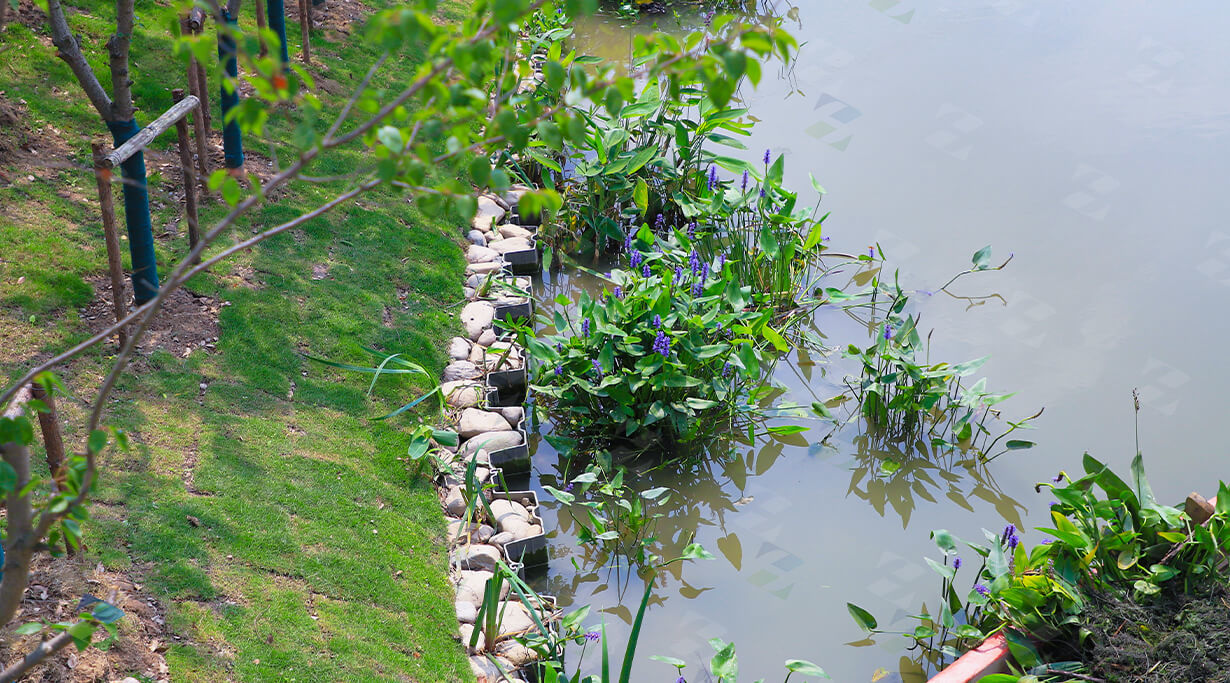
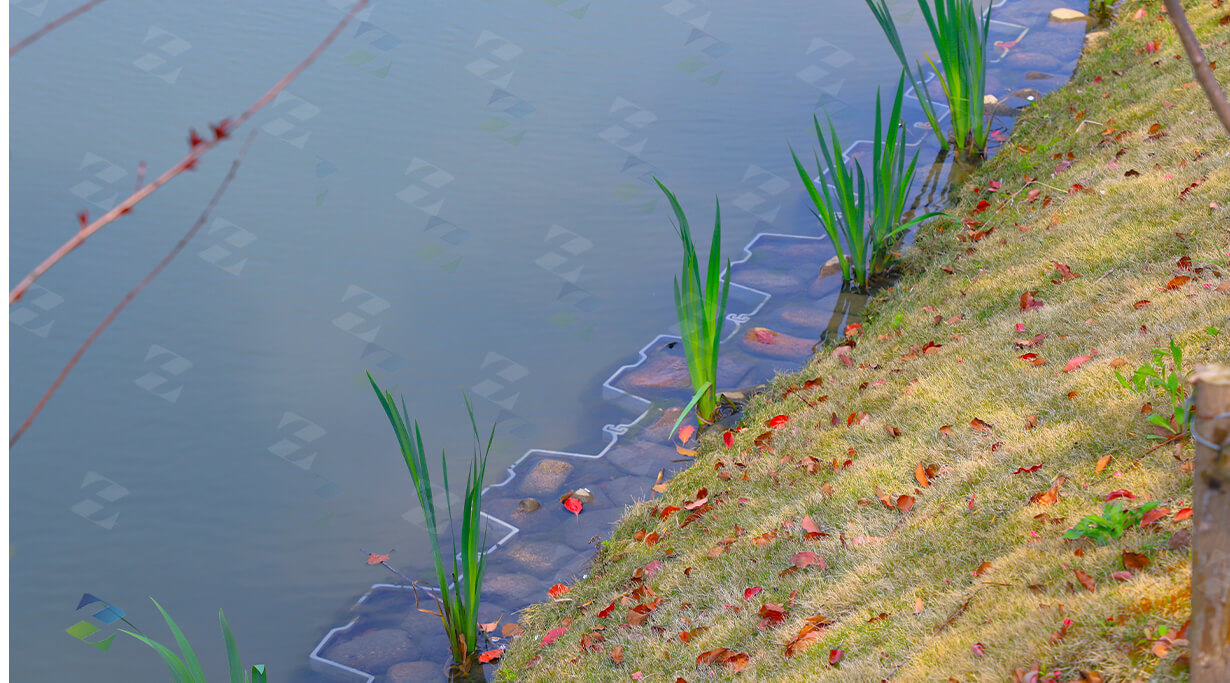
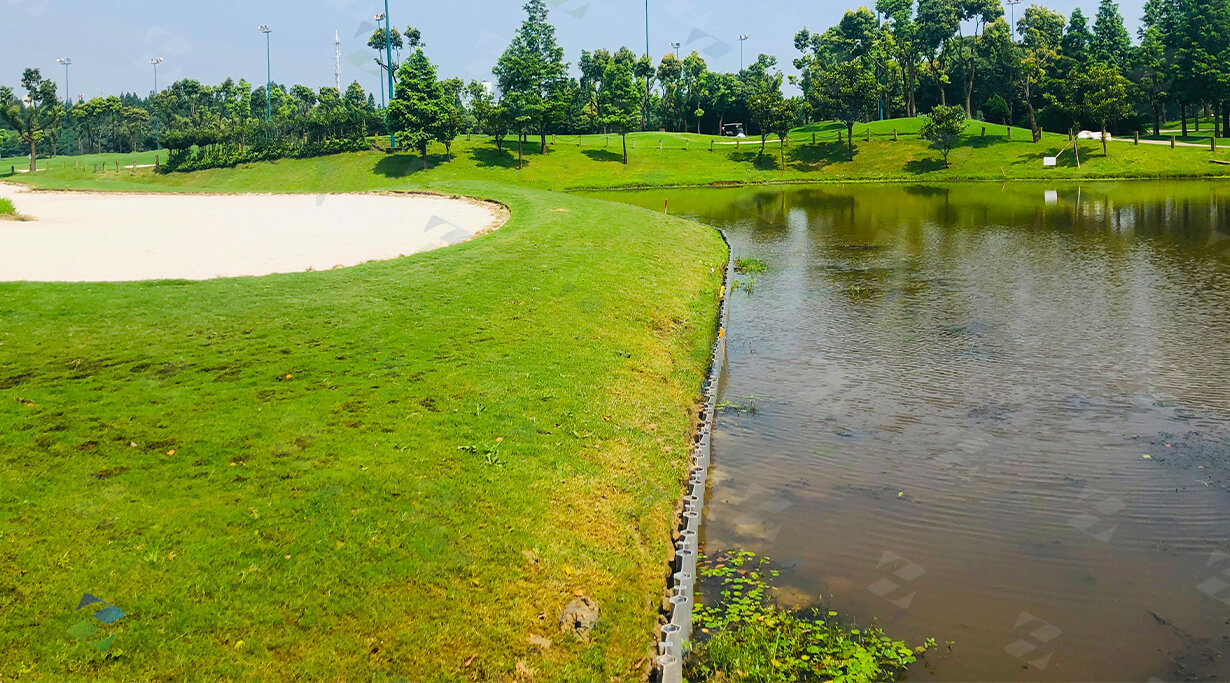
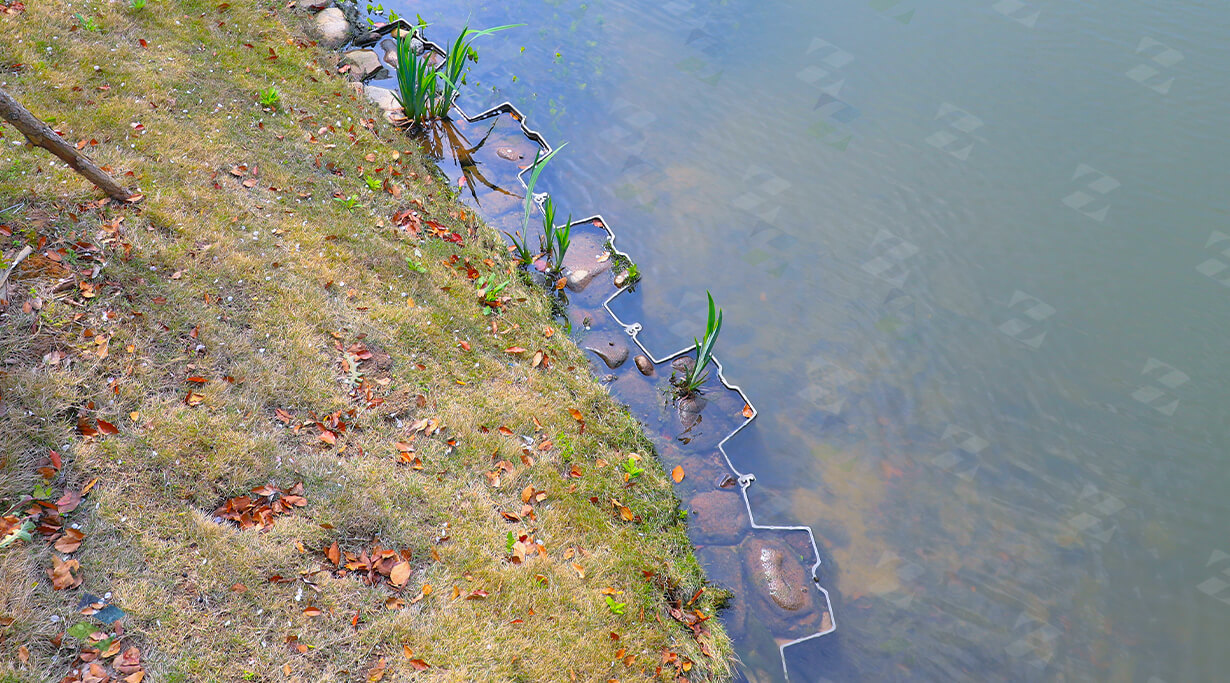
- Lake and pond shoreline stabilization: Vinyl sheet piling is widely used to stabilize eroding shorelines of recreational lakes, irrigation reservoirs, and golf course water features where aesthetics, low maintenance, and ecological compatibility are all priorities.
- Flood defense and levee construction: The interlock system of vinyl sheet piling provides effective seepage control, and vinyl's immunity to deterioration in wet-dry cycling conditions makes it well-suited to flood walls and levee face protection that are periodically inundated.
- Contaminated land and brownfield sites: In chemically aggressive soils contaminated with hydrocarbons, heavy metals, or acidic leachate — conditions that would rapidly degrade steel — vinyl sheet piling maintains its structural integrity, making it valuable for containment walls and cutoff barriers at contaminated site remediation projects.
- Low-to-medium height retaining walls: Residential retaining walls for garden terracing, driveway cut-and-fill sections, and light commercial landscaping applications with retained heights typically up to 1.5 to 2.5 meters are well within the structural capacity of Z-profile and U-profile vinyl sheet piling.
Applications Where Vinyl Sheet Piles Are Not Suitable
- Deep excavation support in dense soils: The lateral loads imposed by deep excavation in stiff clays or dense granular soils generate bending moments that exceed the structural capacity of standard vinyl profiles. Steel or reinforced concrete sheet piling is the appropriate solution for retained heights beyond approximately 3 to 4 meters in competent soil conditions without anchoring.
- High-temperature environments: PVC loses stiffness as temperature rises. In applications where the sheet pile wall is exposed to sustained high temperatures — industrial process areas, geothermal sites, or regions where ground and water temperatures regularly exceed 60°C — vinyl piling will creep and deform under sustained load.
- Soils with large cobbles or hard obstructions: Unlike steel, vinyl cannot be driven through gravel deposits containing large cobbles, boulders, or rock layers without risk of section fracture at the pile toe. Pre-augering through obstruction layers is required, or an alternative material should be considered.
Installation Methods for Vinyl Sheet Piles
The installation method chosen for a vinyl sheet pile project significantly affects both the quality of the finished wall and the risk of pile damage during driving. Vinyl's lower stiffness and impact resistance compared to steel means that installation technique requires more care, and the selection of driving equipment must be matched to the soil conditions and pile profile.
Vibratory Driving
Vibratory hammer installation is the preferred method for vinyl sheet piling in most soil conditions. A vibratory hammer clamps to a purpose-made driving cap that engages the pile section without concentrating impact stress on the PVC material, and transmits oscillating vertical vibration that liquefies the interparticle friction in granular soils and allows the pile to penetrate under its own weight and the clamp force. Vibratory driving generates far lower impact stress in the pile than drop hammer or hydraulic impact methods, making it substantially safer for vinyl piles. In loose to medium-dense sands and soft to firm clays, vibratory driving of vinyl sheet piles is typically straightforward and fast.
Hydraulic Press-In (Silent Piling)
In urban and environmentally sensitive locations where vibration is restricted, hydraulic press-in machines can install vinyl sheet piles by applying a static jacking force through a clamp on the pile head. This method is the most gentle on the pile material and generates essentially zero vibration, but requires firm soil conditions to provide the reaction force necessary to advance the pile, and the equipment cost is higher than vibratory methods. Press-in installation is increasingly used in residential waterfront projects in noise-sensitive areas.
Water Jetting
In dense sands where vibratory driving resistance is high, water jetting — using high-pressure water pumped through a jet pipe alongside or attached to the leading edge of the pile — loosens the soil ahead of the pile toe and reduces skin friction along the driven length. Jetting must be used carefully with vinyl piles because excessive jetting can undermine the soil at the pile toe and reduce the passive resistance available at final penetration depth. Jetting is used as an aid to vibratory driving rather than as a standalone installation method.
Critical Details for a Durable, High-Quality Installation
Beyond the primary installation method, several construction details determine whether a vinyl sheet pile wall performs to its design intent throughout its full service life. These details are frequently underspecified on small projects, leading to preventable problems that compromise wall integrity or appearance.
- Driving cap and follower design: A properly designed driving cap distributes the driving force evenly across the full width of the pile section. Poorly designed caps that concentrate force on the interlock edges or web center will crack the PVC at those stress concentration points. Always use manufacturer-recommended driving caps matched to the specific pile profile being installed.
- Interlock lubrication: Applying a compatible lubricant — typically a non-petroleum-based grease or soap — to the interlock connections before threading piles together reduces insertion resistance and prevents the interlock from binding or splitting during driving. Dry interlocks in granular soils filled with fine sand particles are a common cause of interlock fracture during installation.
- Pile alignment and plumb control: Vinyl sheet piles must be installed plumb and in alignment from the first pile. Deviation from plumb in early piles accumulates as subsequent piles are threaded, making correction increasingly difficult and ultimately resulting in a wall with visible waves or lean. Use a level and alignment guides on the first five to ten piles to establish a straight, plumb baseline for the full wall run.
- Waling, tie-rods, and anchorage: For walls retaining significant lateral loads, a waling beam (horizontal structural member connecting the pile heads) and tie-rods or ground anchors transferring tension to a deadman anchor or grouted anchor behind the wall are essential to limiting deflection and preventing overturning. Undersized or absent anchorage systems are the most common cause of vinyl sheet pile wall failure in service.
- Embedment depth verification: The pile must reach its design embedment depth to develop the passive resistance needed to maintain stability. In variable soil conditions, it is important to verify that each pile has reached the design depth and not terminated early on a local hard spot. Unexpectedly short embedment at any point in the wall creates a potential failure mechanism that may not become apparent until the wall is loaded by backfill or water.
Long-Term Performance and Maintenance Expectations
A correctly specified and properly installed vinyl sheet pile wall requires very little attention over its service life, but understanding what to monitor during periodic inspections helps identify the rare cases where intervention is needed before minor issues develop into structural problems.
The most common long-term performance concern with vinyl sheet piling is interlock seepage — the passage of water through the interlock connections, which are designed to be close-fitting but not hydraulically tight in their standard configuration. For applications where a positive water cutoff is required, interlocks can be filled with a compatible polyurethane sealant at installation or specified with factory-fitted interlock seals. For standard retaining and bulkhead applications, low-level seepage through interlocks is structurally harmless, though it may carry fine soil particles in the early months of the wall's life as the soil behind the wall consolidates against the interlock faces.
Surface chalking — a whitish powdering of the PVC surface — is a normal aging characteristic of exterior PVC exposed to UV radiation over many years and does not indicate structural deterioration. It represents consumption of the UV stabilizer package in the compound surface layer. High-quality vinyl sheet piling formulated with adequate UV stabilizer loading will not begin to show meaningful chalking for 15 to 25 years under typical mid-latitude UV exposure conditions. If surface appearance is important for an aesthetic application, UV-resistant color coatings formulated for PVC substrates can be applied to refresh the surface. Structural integrity is not affected by surface chalking and no structural remediation is required in response to it.