English
 中文简体
中文简体
Oct 20,2026
Content
- 1 Why Are Vinyl Sheet Piles Gaining Popularity in Modern Construction?
- 2 What Are Vinyl Sheet Piles and How Do They Work?
- 3 How Do Vinyl Sheet Piles Deliver Structural Strength?
- 4 Why Do Vinyl Sheet Piles Offer Better Long-Term Value?
- 5 How Do They Improve Sustainability in Construction?
- 6 Where Are Vinyl Sheet Piles Most Commonly Used?
- 7 How Do They Compare with Steel and Timber?
- 8 What Should Buyers Consider Before Choosing Vinyl Sheet Piles?
- 9 Final Thoughts: Why Are Vinyl Sheet Piles a Smart Investment?
Why Are Vinyl Sheet Piles Gaining Popularity in Modern Construction?
Vinyl sheet piles have become an increasingly popular solution in modern civil engineering, marine construction, flood protection, and landscape reinforcement projects. As infrastructure developers and contractors seek materials that combine structural performance with long-term value, vinyl sheet piling offers a practical alternative to traditional materials such as steel, concrete, and timber.
The growing appeal of vinyl sheet piles comes from three major advantages: exceptional durability, cost-effective lifecycle performance, and strong sustainability benefits. These interlocking panels are engineered to form continuous retaining walls, erosion barriers, bulkheads, and water control systems while maintaining resistance to corrosion, chemicals, and environmental wear.
For projects located in harsh soil or marine conditions, vinyl sheet piles often provide a more reliable and lower-maintenance solution than conventional piling materials.
What Are Vinyl Sheet Piles and How Do They Work?
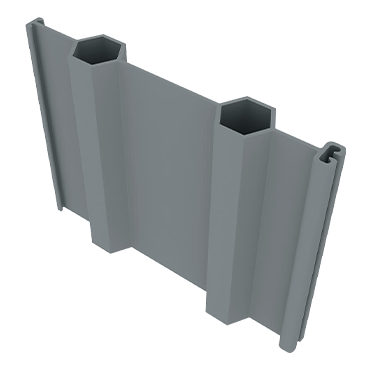
Vinyl sheet piles are extruded PVC or polymer-based structural profiles designed with interlocking edges that connect seamlessly to form a continuous wall system. Once driven into the ground, they create a stable barrier capable of resisting lateral soil pressure, water movement, and erosion forces.
Their interlock design allows multiple panels to be joined tightly, improving structural continuity and water resistance. This makes them highly effective for retaining walls, shoreline stabilization, flood defense, and drainage infrastructure.
Unlike traditional materials, vinyl sheet piles are lightweight yet engineered to maintain significant bending strength and long-term dimensional stability.
How Do Vinyl Sheet Piles Deliver Structural Strength?
A common misconception is that polymer-based materials are weaker than steel or concrete. In reality, modern vinyl sheet piles are specifically engineered for structural performance under demanding site conditions.
Their strength comes from profile geometry, rib reinforcement, and material formulation. The shape of the sheet pile cross-section significantly improves moment resistance and load distribution.
Lateral Load Resistance
Vinyl sheet piles are designed to resist soil and hydrostatic pressure, making them suitable for retaining and waterfront applications.
Impact and Flexibility
Unlike rigid concrete structures, vinyl provides controlled flexibility, which helps absorb dynamic forces such as wave impact and minor ground movement.
Long-Term Dimensional Stability
High-quality formulations resist warping, cracking, and deformation over time.
Why Do Vinyl Sheet Piles Offer Better Long-Term Value?
The true value of vinyl sheet piles becomes most evident when evaluating total lifecycle cost rather than initial material price alone.
Traditional steel piles may require anti-corrosion treatment, coatings, welding maintenance, and periodic replacement in aggressive environments. Timber can suffer from rot, insect damage, and moisture degradation.
Vinyl sheet piles minimize these long-term expenses.
- Minimal maintenance costs
- No rust or corrosion treatment
- Long service life
- Lower replacement frequency
This makes them highly cost-effective for municipal infrastructure and private shoreline projects.
How Do They Improve Sustainability in Construction?
Sustainability is one of the strongest selling points of vinyl sheet piles. Modern construction increasingly prioritizes materials that reduce environmental impact while maintaining long-term performance.
Corrosion-Free Performance
Because vinyl does not rust, there is no need for repeated chemical coatings or anti-corrosion paints, reducing environmental contamination.
Recyclability
Many vinyl sheet piles are manufactured using recyclable PVC formulations and can be recycled at the end of their service life.
Reduced Resource Consumption
Their long lifespan reduces the need for replacement materials, lowering overall resource use.
Where Are Vinyl Sheet Piles Most Commonly Used?
Vinyl sheet piles are used across multiple infrastructure sectors.
| Application | Main Benefit | Typical Environment |
| Seawalls | Corrosion resistance | Marine coastlines |
| Flood barriers | Water protection | Urban drainage |
| Retaining walls | Soil stabilization | Landscape engineering |
| Canal reinforcement | Erosion prevention | Agricultural waterworks |
How Do They Compare with Steel and Timber?
Compared with steel, vinyl offers better corrosion resistance and lower maintenance. Compared with timber, it provides longer lifespan and better resistance to moisture and biological degradation.
Although steel may still be preferred for extremely high-load structural applications, vinyl sheet piles often outperform alternatives in waterfront and environmental engineering.
What Should Buyers Consider Before Choosing Vinyl Sheet Piles?
For practical project evaluation, buyers should consider the following factors.
- Required load capacity
- Soil and water conditions
- UV resistance requirements
- Interlock sealing performance
- Expected service life
Choosing the correct profile thickness and section modulus is essential for structural reliability.
Final Thoughts: Why Are Vinyl Sheet Piles a Smart Investment?
Vinyl sheet piles deliver outstanding value by combining structural strength, long-term durability, corrosion resistance, and environmental sustainability. For engineers, contractors, and project developers seeking practical and future-ready infrastructure solutions, they represent a highly competitive choice across marine, flood control, and retaining wall applications.