English
 中文简体
中文简体
Oct 09,2026
Content
- 1 What Are Vinyl Sheet Piles and How Are They Made?
- 2 Corrosion Resistance: The Primary Advantage Over Steel and Timber
- 3 Environmental Credentials: Why Vinyl Sheet Piles Are 100% Environmentally Friendly
- 4 Structural Performance and Load-Bearing Capacity
- 5 Key Applications in River and Marine Engineering
- 6 Installation Methods and Practical Considerations
- 7 Selecting the Right Vinyl Sheet Pile Profile for Your Project
Sheet piling has been a fundamental technique in civil and geotechnical engineering for over a century, used to retain soil and water, create cofferdams, stabilize riverbanks, and construct marine structures. For most of that history, steel was the dominant material — strong, widely available, and well understood by contractors. But steel sheet piles corrode, especially in marine and brackish water environments, requiring costly protective coatings, cathodic protection systems, and eventually replacement. Vinyl sheet piles — manufactured from high-performance polyvinyl chloride (PVC) compounds — have emerged as a technically credible and increasingly preferred alternative for a broad range of waterfront, environmental, and infrastructure applications. Their corrosion resistance, zero maintenance requirement, environmental inertness, and long service life address precisely the limitations that make steel problematic in water-contact applications. This article examines vinyl sheet piles in practical depth: their material properties, structural performance, environmental credentials, installation characteristics, and the specific applications where they outperform traditional alternatives.
What Are Vinyl Sheet Piles and How Are They Made?
Vinyl sheet piles are structural retaining elements manufactured by extrusion of rigid PVC compound through a die that produces the characteristic interlocking profile cross-section. The PVC compound used in structural sheet piling is not standard commodity PVC — it is a specially formulated engineering compound that incorporates impact modifiers, UV stabilizers, thermal stabilizers, and processing aids to achieve the combination of stiffness, impact resistance, and long-term weathering stability required for civil engineering service. The formulation is critical: PVC without impact modification is brittle under cold-temperature driving conditions, and PVC without UV stabilization will degrade and embrittle after several years of outdoor exposure.
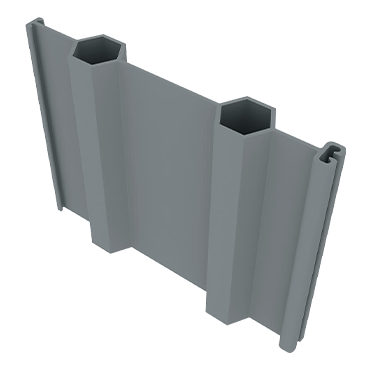
The extrusion process produces piles of consistent cross-sectional geometry with interlocking tongue-and-groove or ball-and-socket joints along both edges, allowing individual pile sections to be connected side by side to form a continuous wall. The interlocking joint design is engineered to allow the slight relative movement that occurs during installation while maintaining a tight enough fit to prevent soil or water from bypassing the wall at the joint. Some vinyl sheet pile systems include a rubberized seal element within the interlock to further reduce water and sediment infiltration through the joint.
Profile shapes for vinyl sheet piles include flat web profiles (low section modulus, suitable for light retaining and aesthetic applications), Z-profiles (higher section modulus for structural retaining walls), and composite profiles that combine vinyl flanges and webs with steel or fiber-reinforced polymer (FRP) inserts for maximum structural performance. The section modulus — a measure of the pile's resistance to bending — increases with profile depth and web thickness, and determines the maximum unsupported height and loading that a given pile section can withstand without overstressing the material.
Corrosion Resistance: The Primary Advantage Over Steel and Timber
The single most significant advantage of vinyl sheet piles over steel and timber alternatives is their complete immunity to corrosion and biological degradation. Steel sheet piles in marine and riverine environments are subject to electrochemical corrosion that progressively reduces their thickness and structural integrity. The corrosion rate depends on water chemistry, oxygen content, pH, temperature, and the presence of sulfate-reducing bacteria, but in aggressive marine environments, unprotected steel can lose 0.1–0.3 mm of section per year — enough to compromise a steel pile's structural capacity within 10–20 years without protective intervention.
Protecting steel sheet piles from corrosion requires a combination of coatings (typically epoxy or coal tar epoxy systems), cathodic protection (sacrificial anodes or impressed current systems), and periodic inspection and maintenance. These measures add substantial cost — both as initial installation expense and as recurring maintenance expenditure over the structure's design life. Cathodic protection systems require monitoring, anode replacement, and electrical system maintenance. Coating damage must be repaired promptly or corrosion accelerates at the damaged area. In environmentally sensitive locations, the use of coal tar coatings is now restricted or prohibited, and even epoxy coatings introduce chemicals into the aquatic environment as they weather and erode.
Vinyl sheet piles require none of this intervention. PVC is inherently inert to the electrochemical corrosion mechanisms that attack steel, and it does not support the biological attack (boring organisms, fungi, bacteria) that destroys untreated timber piling. A vinyl sheet pile wall installed today will have the same cross-sectional geometry and essentially the same structural properties in 50 years as it has on the day of installation, without any protective treatment, inspection-driven maintenance, or material replacement. For project owners with long infrastructure asset horizons — municipalities, port authorities, environmental agencies, and infrastructure developers — this maintenance-free service life represents a compelling total cost of ownership advantage over steel that more than offsets vinyl's typically higher initial unit price.
Environmental Credentials: Why Vinyl Sheet Piles Are 100% Environmentally Friendly
The environmental performance of vinyl sheet piles extends beyond the absence of corrosion inhibitors and protective coatings. PVC in its rigid, stabilized form is chemically inert in contact with water — it does not leach plasticizers (rigid PVC contains no plasticizers), heavy metals (modern thermal stabilizer systems use calcium-zinc rather than lead or cadmium), or other substances that would create aquatic toxicity concerns. This chemical inertness makes vinyl sheet piling genuinely compatible with use in drinking water catchment areas, fish habitat restoration projects, ecologically sensitive wetlands, and any environment where the introduction of contaminants from construction materials would be unacceptable.
The contrast with steel is particularly stark in environmentally sensitive projects. Steel piling in saltwater environments generates iron oxide corrosion products that can alter local sediment chemistry and affect benthic communities. Protective coatings on steel piling release chemical compounds into the water column as they degrade. Timber piling, if treated with creosote or copper-chromium-arsenic (CCA) preservatives, introduces persistent organic pollutants and heavy metals into aquatic ecosystems — treatments that are now banned in many jurisdictions for in-water use. Untreated timber piling avoids these issues but is attacked by marine boring organisms (Teredo navalis, Limnoria) and has a short, unpredictable service life in marine environments.
Vinyl sheet piles also support circular economy principles. PVC is thermoplastic and can be mechanically recycled at end of service life — the piles can be extracted from the ground, processed through a granulator, and the resulting material used in new PVC products. The recycling infrastructure for rigid PVC is well-established in Europe and North America, and several vinyl sheet pile manufacturers operate take-back programs that accept end-of-life piles for recycling. The carbon footprint of recycled PVC production is significantly lower than virgin material, making the lifecycle environmental impact of vinyl sheet piling even more favorable when full recycling at end of life is achieved.
Structural Performance and Load-Bearing Capacity
A common misconception about vinyl sheet piles is that their polymer construction makes them inherently less structurally capable than steel. While it is true that PVC has a lower elastic modulus (stiffness) than steel — approximately 3,000–4,000 MPa for rigid PVC compared to 200,000 MPa for steel — this comparison is misleading in isolation. Structural performance in sheet piling applications depends on the section modulus of the pile profile as well as the material stiffness, and vinyl pile manufacturers have developed deep-section profiles with section moduli that deliver adequate structural performance for a wide range of retaining and marine applications.
| Property | Vinyl Sheet Pile (PVC) | Steel Sheet Pile | Timber Pile |
| Corrosion resistance | Excellent (none) | Poor (requires protection) | Poor (biological attack) |
| Maintenance requirement | None | High (coatings, CP systems) | Medium–High |
| Design service life | 50+ years | 25–50 years (with maintenance) | 10–30 years |
| Environmental impact | Minimal (inert, recyclable) | Moderate (coatings, corrosion) | High (preservatives) |
| Weight (handling) | Light (easy manual handling) | Heavy (crane required) | Medium |
| Recyclability | Yes (thermoplastic) | Yes (steel scrap) | Limited (if treated) |
For applications requiring higher structural performance than standard vinyl profiles can provide, composite vinyl sheet piles — which embed steel tubes, wide-flange sections, or FRP elements within the vinyl profile — combine the corrosion resistance of vinyl with the structural stiffness of steel or composite reinforcement. These hybrid systems are used in seawalls, bulkheads, and retaining walls where cantilever heights or surcharge loads exceed the capacity of unreinforced vinyl profiles but where corrosion resistance remains a priority.
Key Applications in River and Marine Engineering
Vinyl sheet piles are deployed across a wide range of river and marine engineering applications where their specific combination of properties — corrosion immunity, environmental inertness, light weight, and low maintenance — provides advantages over traditional materials that outweigh any structural limitations.
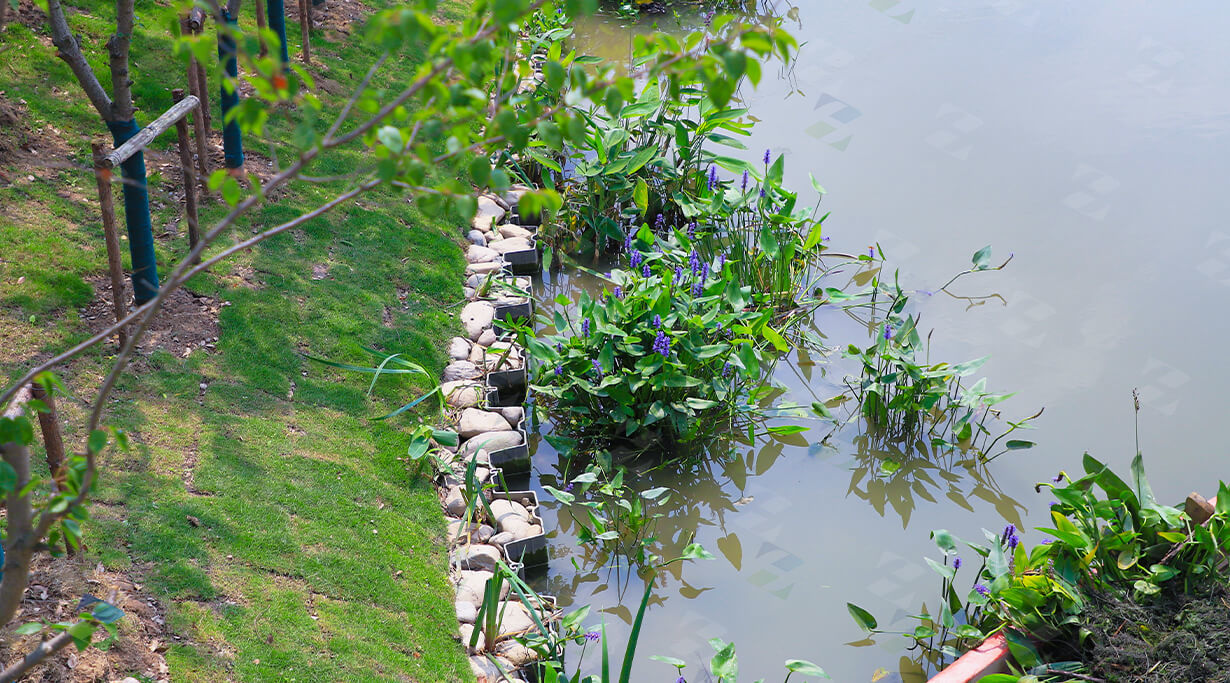
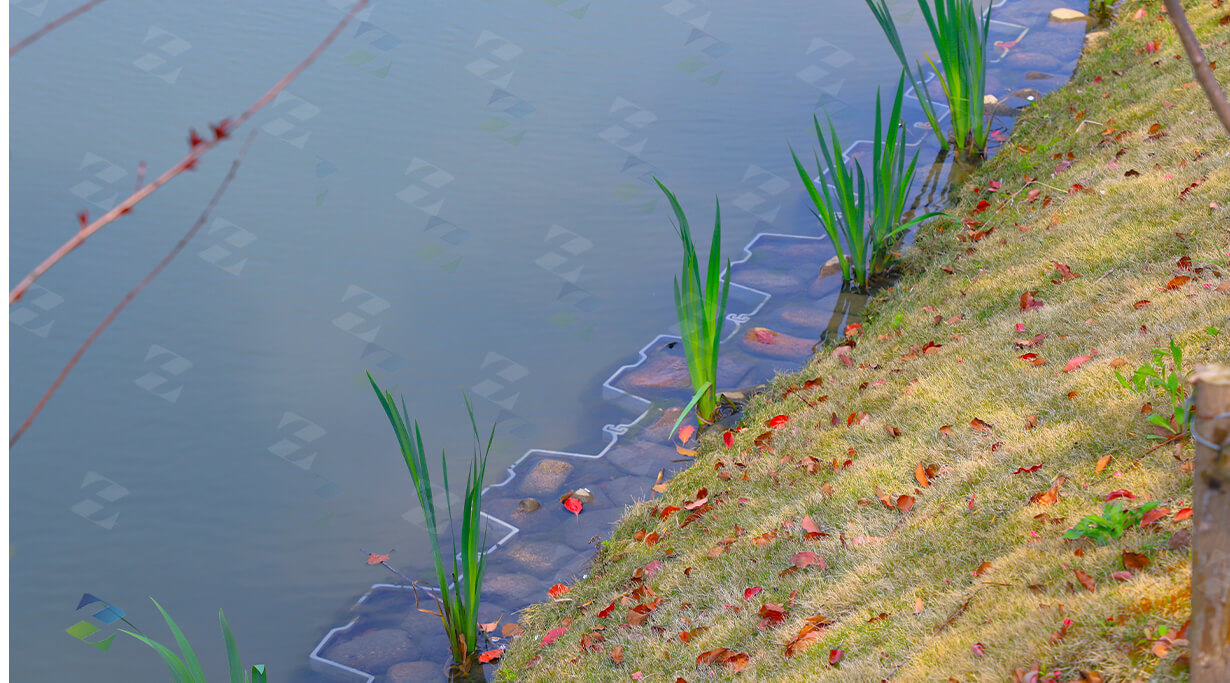
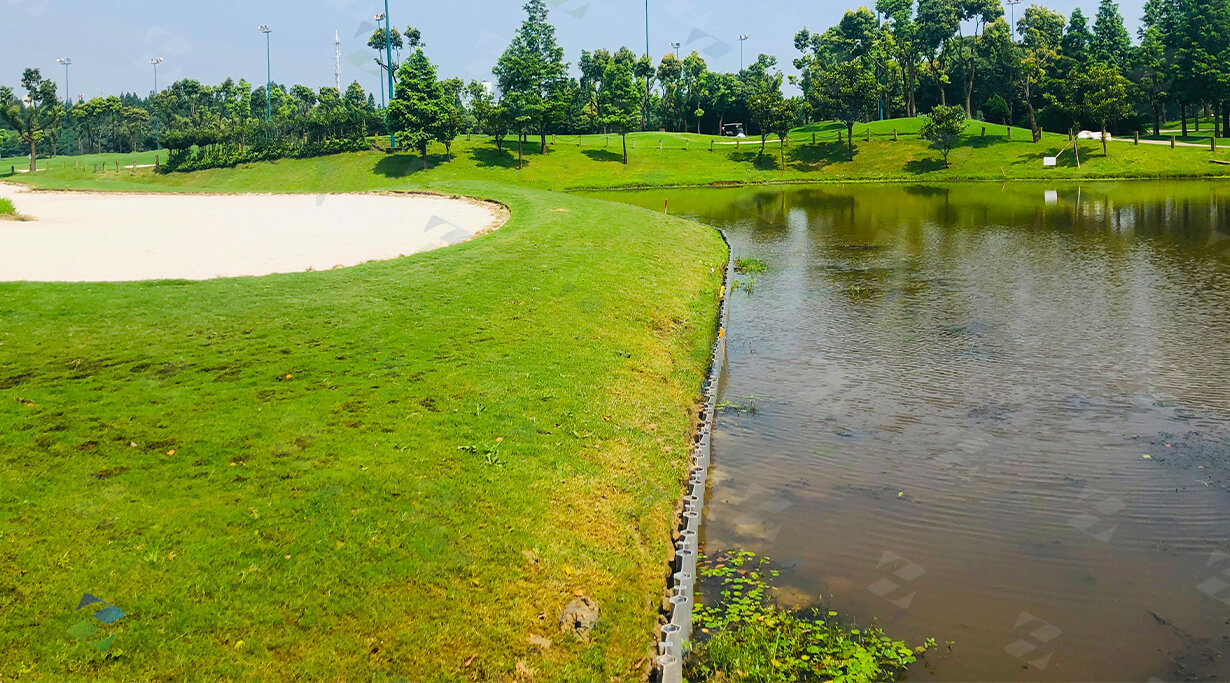
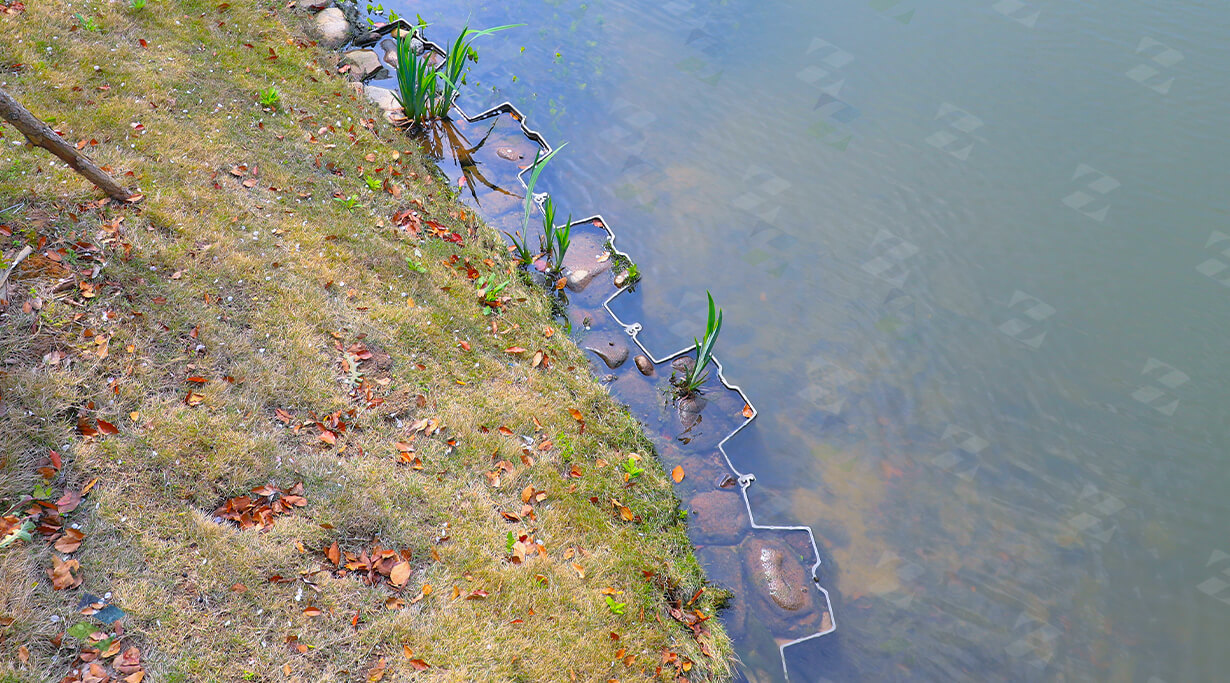
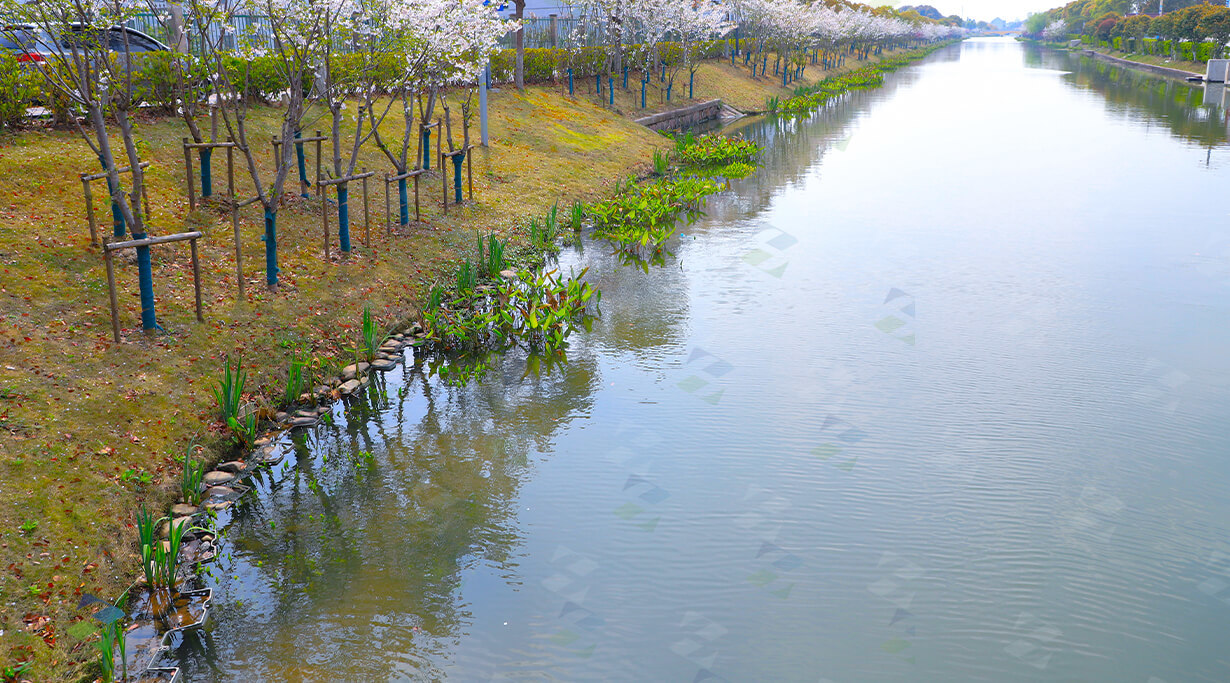
- Riverbank stabilization and erosion control: Vinyl sheet pile walls installed along eroding riverbanks prevent undercutting of the bank by flow scour and wave action. The pile wall absorbs hydraulic forces while the retained soil behind the wall remains stable. Because vinyl piles do not corrode in freshwater or brackish conditions, they provide long-term erosion control without the maintenance demands of steel alternatives in these environments.
- Marina bulkheads and boat slip walls: Vinyl sheet piling is extensively used in marina construction for boat slip separators, floating dock anchor walls, and waterfront bulkheads. The material's resistance to saltwater, marine fouling organisms, and tidal cycling makes it particularly well-suited to marine environments where steel and timber deteriorate rapidly. The smooth PVC surface is also easier to clean than corrugated steel and does not harbor barnacles as aggressively.
- Flood defense barriers: Temporary and permanent flood defense applications use vinyl sheet piling for its rapid installation, reusability (temporary barriers can be extracted and reused), and resistance to the contaminated floodwater that accelerates corrosion of steel barriers. In permanent flood defense installations, the maintenance-free nature of vinyl reduces the lifecycle cost of flood infrastructure that must remain structurally reliable for decades.
- Wetland and habitat restoration projects: Environmental engineers use vinyl sheet piling to create water control structures, isolate contaminated sediments, and manage water levels in wetland restoration projects. The chemical inertness of vinyl is essential in these applications — any material that leaches contaminants into a restoration area directly undermines the project's ecological objectives. Vinyl sheet piles have been used in fish passage improvement projects, salt marsh restoration, and constructed wetland creation where material purity is a prerequisite.
- Contaminated site remediation: Vinyl sheet pile walls are used as barrier systems to contain contaminated groundwater and prevent the lateral migration of pollutants from industrial sites, landfills, and contaminated sediment deposits. The chemical resistance of PVC to a wide range of organic and inorganic contaminants — including petroleum hydrocarbons, chlorinated solvents, and heavy metal leachates — makes vinyl sheet piling more suitable than steel for containment barriers in aggressive chemical environments where steel would corrode rapidly and lose its containment function.
Installation Methods and Practical Considerations
Vinyl sheet piles are installed using the same basic driving techniques as steel sheet piles — vibratory hammers, impact hammers, or hydraulic pressing — but the lower stiffness and impact sensitivity of PVC require some modifications to standard steel pile driving practice. Vibratory installation is strongly preferred for vinyl sheet piles because the oscillating force of a vibratory hammer liquefies the soil around the pile tip during driving, allowing the pile to advance with minimal stress on the pile head and body. Impact hammering with a drop hammer or diesel hammer subjects the pile to sudden shock loads that can crack or split the PVC at the pile head, and if impact installation is required, a specially designed pile cap with a cushioning block must be used to distribute the impact force and prevent point loading on the pile head.
The light weight of vinyl sheet piles — typically 4–12 kg per linear meter depending on the profile, compared to 30–80 kg per linear meter for equivalent-depth steel sections — is a significant practical advantage during installation. Individual pile sections can often be handled manually or with minimal lifting equipment, reducing crane dependency and enabling installation in confined or difficult-access locations where heavy plant cannot operate. This weight advantage also reduces transportation costs and simplifies logistics for remote site installations.
Cold-temperature installation requires attention. PVC becomes more brittle as temperature decreases, and at temperatures below approximately 5°C, vinyl sheet piles are more susceptible to impact damage during driving. In cold-weather installation conditions, slower driving speeds, preheating of the pile tip in very hard ground conditions, and the use of vibratory rather than impact driving all reduce the risk of cold-temperature pile damage. Some manufacturers specify minimum installation temperature limits for their products — these limits should be observed and not overridden in the interest of schedule.
Selecting the Right Vinyl Sheet Pile Profile for Your Project
Profile selection for a vinyl sheet pile application requires a structural analysis that considers the retained height, soil and water loading conditions, surcharge loads from adjacent structures or traffic, and the required factor of safety against bending failure. The section modulus of the pile cross-section must be sufficient to resist the maximum bending moment in the pile under design loading without exceeding the allowable flexural stress of the PVC material — typically 30–45 MPa for structural-grade rigid PVC compound.
For applications with retained heights below approximately 1.5 meters and modest soil pressure, lightweight flat-web or shallow Z-profile vinyl piles are typically sufficient. For retained heights of 1.5–3.0 meters with moderate surcharge loading, deeper Z-profiles with section moduli in the 100–400 cm³/m range are appropriate. For heights above 3.0 meters, significant surcharge loads, or active wave loading in marine environments, composite vinyl-steel profiles or vinyl profiles with internal reinforcement should be evaluated through a full structural design calculation by a qualified geotechnical or structural engineer. The vinyl sheet pile manufacturers' technical departments can typically provide preliminary section selection guidance and engineering calculation support for standard applications.