English
 中文简体
中文简体
Oct 20,2026
Content
- 1 Steel or Vinyl Sheet Piles: How Do You Decide Which Material Is Right for Your Project?
- 2 Understanding the Basic Differences in Material Properties
- 3 Structural Capacity: Where Steel Dominates
- 4 Where Vinyl Sheet Piles Perform Well
- 5 Corrosion Resistance: A Head-to-Head Reality Check
- 6 Installation Considerations and Equipment Requirements
- 7 Cost Comparison: Material, Installation, and Lifetime
- 8 Environmental and Sustainability Considerations
- 9 Practical Decision Framework: Matching Material to Application
Steel or Vinyl Sheet Piles: How Do You Decide Which Material Is Right for Your Project?
Sheet piling is one of the most practical and widely used solutions for earth retention, flood defense, waterfront structures, cofferdams, and land reclamation. But before a single pile is driven into the ground, one of the most consequential decisions a project engineer or contractor faces is material selection. Steel and vinyl (PVC) sheet piles dominate the market, and each brings a fundamentally different set of mechanical properties, corrosion behaviors, installation requirements, and cost profiles. Choosing incorrectly can result in structural failure, budget overruns, or a solution that deteriorates long before the end of its intended service life. This article provides a detailed, practical comparison to help you make the right call for your specific conditions.
Understanding the Basic Differences in Material Properties
Steel sheet piles are hot-rolled or cold-formed sections manufactured from structural steel, typically conforming to grades such as S270GP, S355GP, or S430GP under EN 10248, or ASTM A572 in North American specifications. They interlock along their edges using a continuous clutch system and are driven into the ground to form a continuous wall. Steel's defining characteristic is its very high modulus of elasticity — approximately 200 GPa — which means steel sheet piles are exceptionally stiff and strong, capable of resisting large bending moments and high lateral earth and water pressures without excessive deflection.
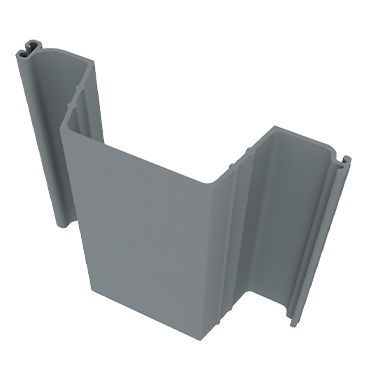
Vinyl sheet piles, also called PVC sheet piles, are extruded from rigid polyvinyl chloride compound and formed into interlocking profiles. The modulus of elasticity of vinyl is approximately 2.8 to 4.1 GPa — roughly 50 to 70 times lower than steel. This fundamental difference in stiffness means vinyl is inherently a lower-load material, suitable for applications where structural demands are modest. However, vinyl compensates with total immunity to corrosion, very low maintenance requirements, and a significantly lower installed cost in the right applications.
Structural Capacity: Where Steel Dominates
For any application requiring significant structural performance, steel sheet piling is the clear engineering choice. The moment of inertia and section modulus of steel pile profiles are far higher than what vinyl can achieve at equivalent dimensions, allowing steel walls to resist the lateral pressures generated by deep excavations, high retained soil heights, heavy surcharge loads, wave action, and ship berthing forces.
Heavy-duty steel sheet pile sections such as the Larssen or Z-pile profiles used in major port and harbor works can achieve section moduli exceeding 3,000 cm³/m, enabling wall embedment depths of 10 to 20 meters or more with appropriate anchoring or propping systems. These are the walls that support quay structures, lock gates, bridge abutments, and deep basement excavations in urban environments — applications where vinyl would simply fail under load within a short time of installation.
Steel sheet piles can also be integrated with tie rods, ground anchors, and waling systems to create anchored retaining walls that distribute loads efficiently across the structure. The high strength of steel allows connection details to be welded or bolted directly to the pile section, providing the structural continuity that complex retention systems require.
Where Vinyl Sheet Piles Perform Well
Vinyl sheet piles are not a compromise or an inferior product — they are a purpose-designed solution that genuinely outperforms steel in specific conditions. The key is understanding where those conditions apply.
Low-Load Retaining and Landscaping Applications
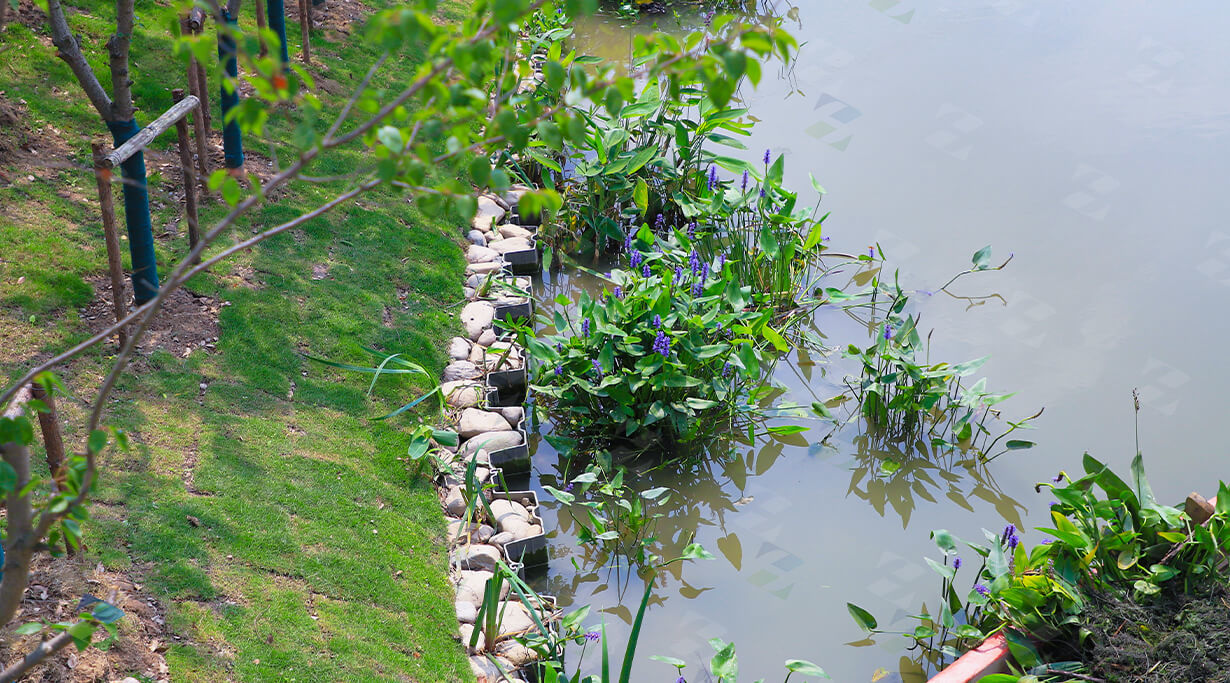
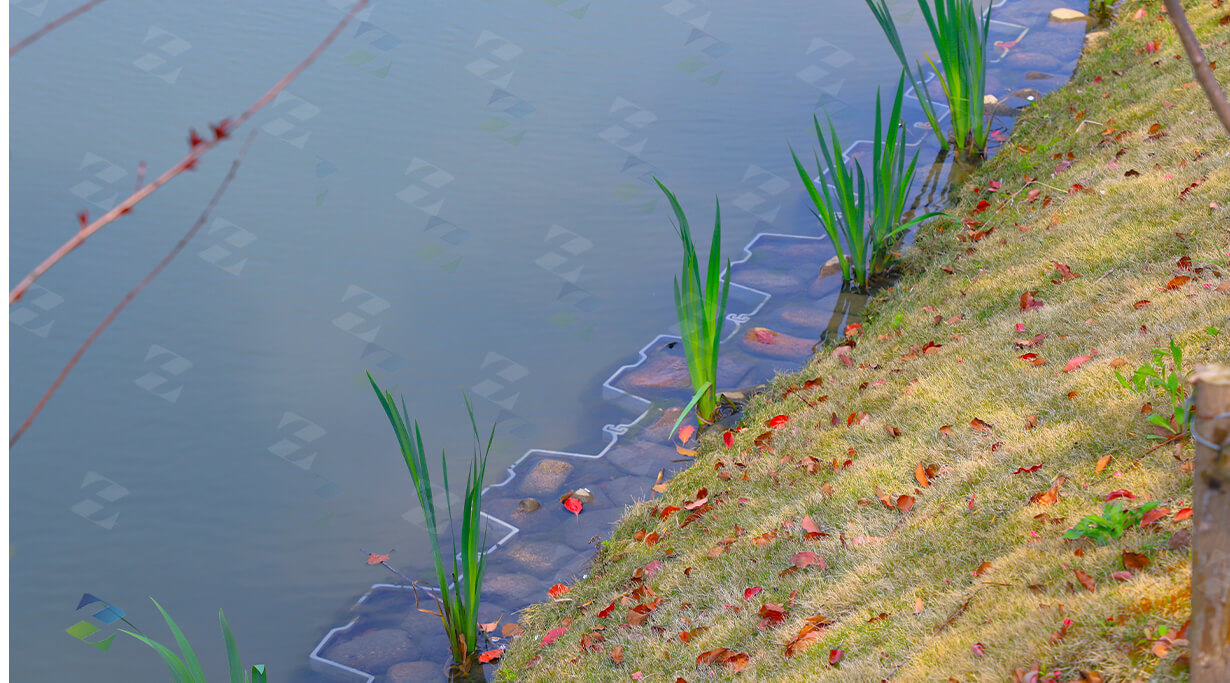
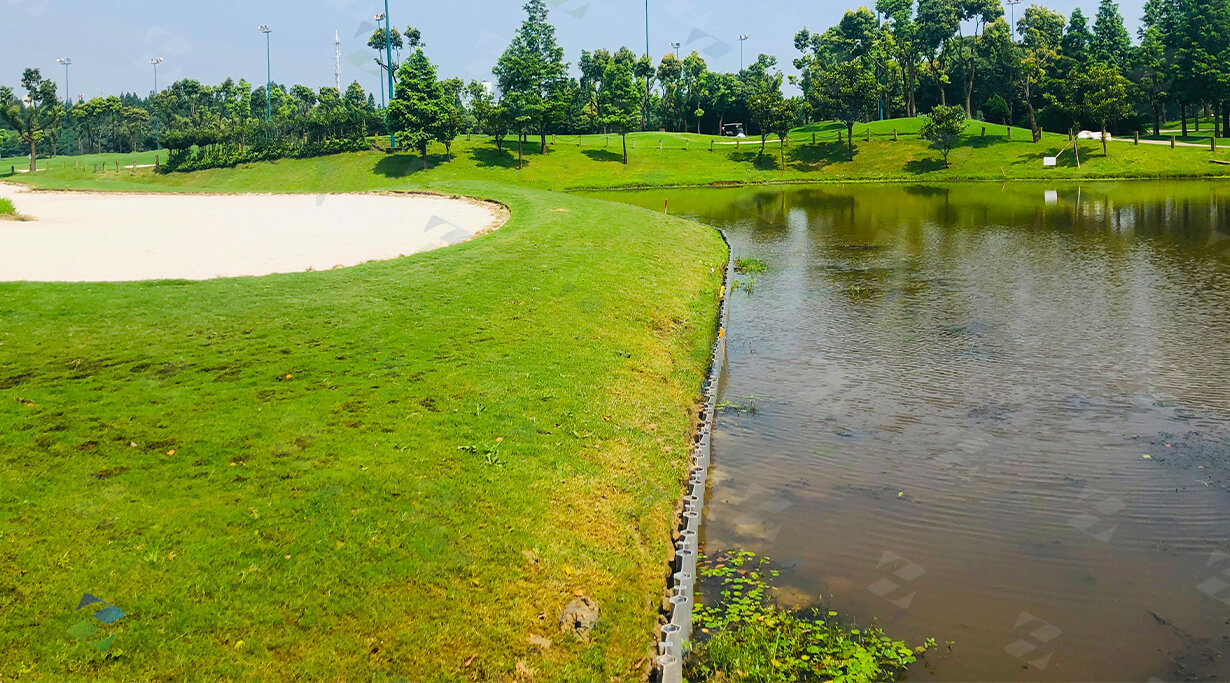
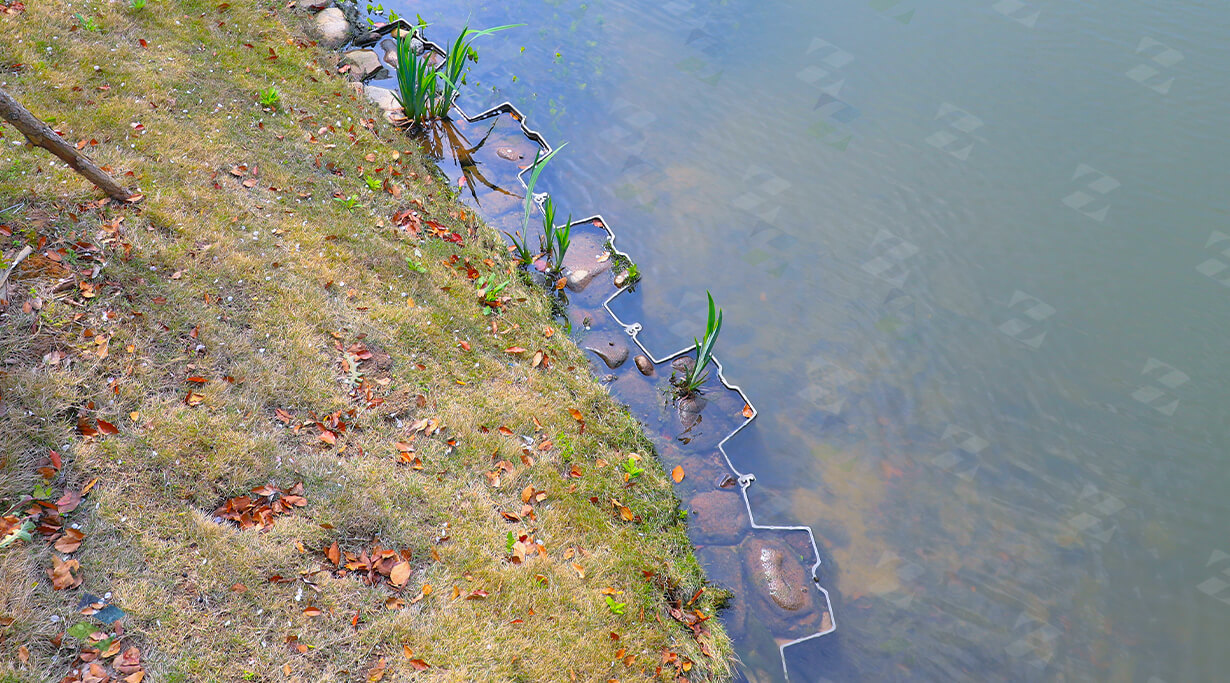
For residential and light commercial applications — garden retaining walls, pond liners, landscape edging, small waterway bank protection, and low-height flood barriers — vinyl sheet piles provide perfectly adequate structural performance at a fraction of the material cost. Retained heights of up to 1.5 to 2.5 meters under light loading conditions are typically within the structural capability of standard vinyl profiles, particularly when the wall is cantilevered into firm ground or supported by a back-anchor system.
Highly Corrosive Environments
This is where vinyl holds its strongest advantage over steel. PVC is completely immune to corrosion from saltwater, brackish water, acidic groundwater, and most chemical contaminants. In marine environments — tidal zones, estuaries, marinas, and coastal flood defense works — steel sheet piling suffers accelerated corrosion in the splash zone and at the waterline, where alternating wet and dry cycles combined with dissolved oxygen and chloride ions create the most aggressive corrosion conditions possible. Managing this corrosion requires expensive protective systems including cathodic protection, anti-corrosion coatings, and periodic inspection and maintenance programs.
Vinyl eliminates this problem entirely. A vinyl sheet pile wall installed in a tidal marina or saltwater channel requires essentially no corrosion-related maintenance over its design life of 50 years or more. For lightly loaded coastal and waterway applications, the lifetime cost advantage of vinyl over steel — when maintenance and corrosion protection are fully accounted for — can be substantial.
Corrosion Resistance: A Head-to-Head Reality Check
Corrosion is the most significant long-term threat to steel sheet pile performance and the most common justification for specifying vinyl in waterfront applications. Understanding the corrosion behavior of steel in different environments is essential for making the right material choice.
Steel corrosion rates vary dramatically by environment. In undisturbed soil with neutral pH and low chloride content, steel piles corrode very slowly — often less than 0.01mm per year — and many structural steel sheet pile walls have performed successfully for 50 to 80 years in benign soil conditions with no corrosion protection at all. In aggressive marine environments, however, corrosion rates in the splash zone can reach 0.3 to 0.5mm per year or more, and without protective measures, a standard-gauge steel pile section can lose structurally significant wall thickness within 15 to 20 years.
Corrosion protection options for steel include fusion-bonded epoxy coatings, coal tar epoxy, thermal spray zinc or aluminum coatings, and impressed current or sacrificial anode cathodic protection systems. These systems add cost — both in initial installation and in ongoing monitoring and maintenance — and none of them provide the absolute corrosion immunity of vinyl. However, for applications where steel is structurally necessary, properly designed and maintained corrosion protection systems can extend service life to 50 years or beyond.
Installation Considerations and Equipment Requirements
The installation process for steel and vinyl sheet piles differs significantly in equipment requirements, ground suitability, and the risks of damage during driving.
Steel sheet piles are driven using vibratory hammers, impact hammers, or hydraulic press-in machines. Their high strength allows them to penetrate dense soils, gravels, and weathered rock without damage, and if a pile is slightly bent or damaged during driving, it retains meaningful structural capacity. Vibratory driving is the most common method for steel piles in free-draining granular soils, while press-in methods are favored in urban environments where vibration must be minimized near existing structures or sensitive utilities.
Vinyl sheet piles are considerably more sensitive to installation stresses. They must be driven carefully using vibratory hammers with controlled frequency and amplitude, and driving through hard soils, gravels, or obstructions risks splitting, crushing, or buckling the vinyl section. Most vinyl pile manufacturers specify maximum driving resistance limits, and driving into ground conditions that exceed these limits will result in damage. In practice, vinyl is best suited to soft to medium soils — clays, silts, soft sands — where installation stresses remain within the material's capability. Pre-augering or water jetting is often used to assist installation in borderline conditions.
Cost Comparison: Material, Installation, and Lifetime
Cost comparison between steel and vinyl must account for material supply, installation, corrosion protection, and long-term maintenance to be meaningful. The table below summarizes the key cost factors:
| Cost Factor | Steel Sheet Piles | Vinyl Sheet Piles |
| Material supply cost | Higher — subject to steel market volatility | Lower for equivalent wall area |
| Installation equipment | Heavy plant required — higher mob cost | Lighter equipment — lower mob cost |
| Corrosion protection | Significant cost in aggressive environments | None required |
| Long-term maintenance | Inspection and coating renewal required | Minimal — periodic inspection only |
| Reusability | High — steel piles can be extracted and reused | Low — vinyl is typically left in place |
| Scrap value at end of life | Positive — steel has recyclable scrap value | Minimal |
Environmental and Sustainability Considerations
Sustainability is an increasingly important factor in material selection for civil engineering projects, and both steel and vinyl have distinct environmental profiles that are worth understanding.
Steel has a high embodied carbon footprint in primary production, but modern electric arc furnace steelmaking using recycled scrap significantly reduces this impact, and structural steel sheet piles are 100% recyclable at end of life. The reusability of steel piles — which can be extracted, cleaned, and reused on multiple projects — further improves their environmental credentials over a full lifecycle perspective. Many steel pile manufacturers now publish Environmental Product Declarations (EPDs) with verified carbon footprint data per tonne of product.
Vinyl (PVC) production is energy-intensive and involves chlorine chemistry, which carries environmental concerns. PVC is not as readily recyclable as steel, and most vinyl sheet piles are left permanently in the ground at end of project life. However, vinyl's complete absence of corrosion means no anti-corrosion chemicals, no cathodic protection systems, and no coating maintenance — all of which have their own environmental costs when associated with steel in aggressive environments. For specific low-load, high-corrosion applications, vinyl's maintenance-free profile represents a genuine environmental advantage in operational terms.
Practical Decision Framework: Matching Material to Application
The decision between steel and vinyl sheet piles becomes straightforward once the project parameters are clearly defined. Use the following criteria to guide your selection:
- Choose steel when retained height exceeds 2.5 meters, when surcharge or structural loads are significant, when the wall must support anchors, tie rods, or waling systems, when ground conditions include dense gravels or obstructions that require robust driving capability, or when the pile may need to be extracted and reused after a temporary works application.
- Choose vinyl when the application involves low retained heights in light soil or water conditions, when the environment is highly corrosive (marine, brackish, or chemically contaminated groundwater), when long-term maintenance costs must be minimized, when ground conditions are soft enough for safe vinyl installation, or when budget constraints favor lower initial material and installation costs for non-structural applications.
- Consider a hybrid approach for certain waterfront projects where steel is used for the primary structural wall and vinyl is used for secondary barriers, wave screens, or non-structural partition walls within the same project, allowing each material to be deployed where it performs best.
- Always conduct a geotechnical investigation before finalizing material selection. Ground conditions — soil type, groundwater level, soil aggressivity, and the presence of obstructions — affect both the structural design and the installation feasibility of whichever material is chosen.
- Engage a structural engineer for any wall with a retained height above 1.5 meters or in any application where failure would pose a safety risk or cause significant property damage. Sheet pile design involves soil-structure interaction analysis that goes well beyond simple rule-of-thumb selection between materials.