English
 中文简体
中文简体
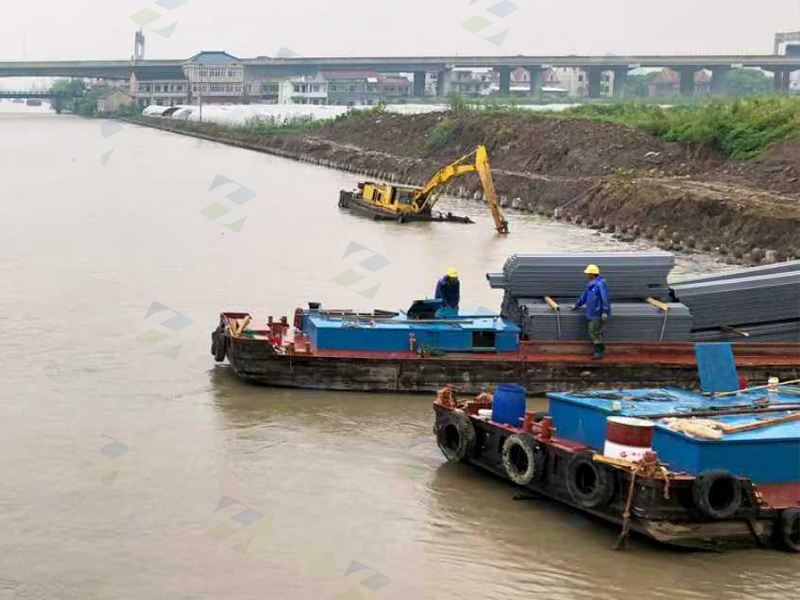
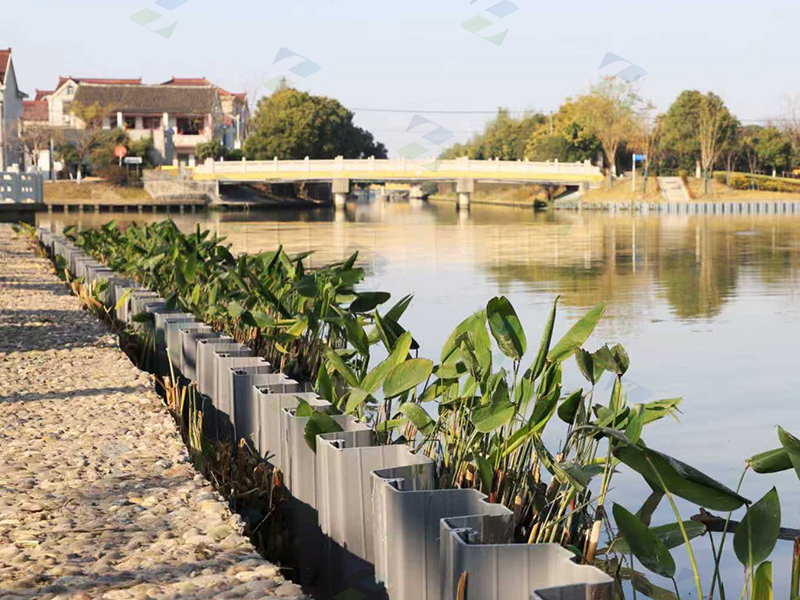

Specification
| Item | Detail |
|---|---|
| Material | Rigid PVC, low-permeability grade |
| Panel width | 400 mm / 500 mm |
| Panel thickness | 10 mm - 22 mm |
| Length | 2 m - 9 m, based on design flood elevation and cut-off depth |
| Joint type | Sealed interlocking tongue and groove |
| Typical use | Levee seepage cut-off, floodwall construction, emergency flood barriers |
| Installation method | Vibratory hammer or hydraulic press-in equipment |
| Deployment speed | Suited to both planned reinforcement and time-sensitive flood season work |
Design flood elevation and seepage path length should be based on your site's hydraulic study, so please share that data so we can help confirm an appropriate panel length.
Application
This piling is used where controlling water passage during flood events is the primary engineering concern, whether reinforcing an existing earthen levee or forming part of a new floodwall structure.
- Levee seepage cut-off: reduces under-seepage that can erode an embankment from within during high water.
- New floodwall construction: forms the core barrier element of a permanent floodwall structure.
- Urban flood barrier systems: protects low-lying developed areas along rivers and flood-prone waterways.
- Emergency and seasonal reinforcement: supplements existing flood defenses ahead of high-risk seasons.
Flood control structures are typically subject to design review by the relevant flood control authority, so we recommend finalizing your engineering design before ordering.
Advantages
- Effective seepage cut-off: sealed joints reduce the under-seepage path that commonly weakens levees.
- Fast installation: can be driven quickly with standard equipment when time is a factor.
- No corrosion-related leak paths: avoids the pinhole leaks that can develop in corroded steel sheet piling.
- Durable in cyclical wet-dry exposure: performs consistently across repeated flood and dry-season cycles.
- Compatible with existing embankments: can be driven into an existing levee without full reconstruction.
For major flood defense infrastructure, this product is typically one component within a broader engineered flood control design reviewed by a qualified engineer.