English
 中文简体
中文简体

Specification
| Item | Detail |
|---|---|
| Material | Marine-grade PVC, UV and saltwater resistant |
| Panel width | 400 mm / 500 mm |
| Panel thickness | 12 mm - 25 mm |
| Length | 3 m - 10 m, based on water depth and tidal range |
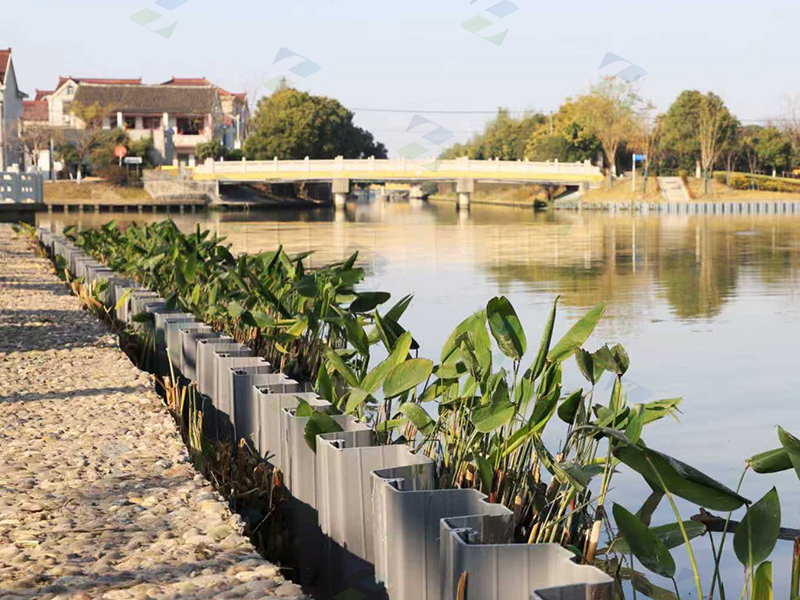
| Joint type | Sealed interlocking tongue and groove |
| Typical use | Quay walls, small craft harbors, breakwater cores, dock retaining walls |
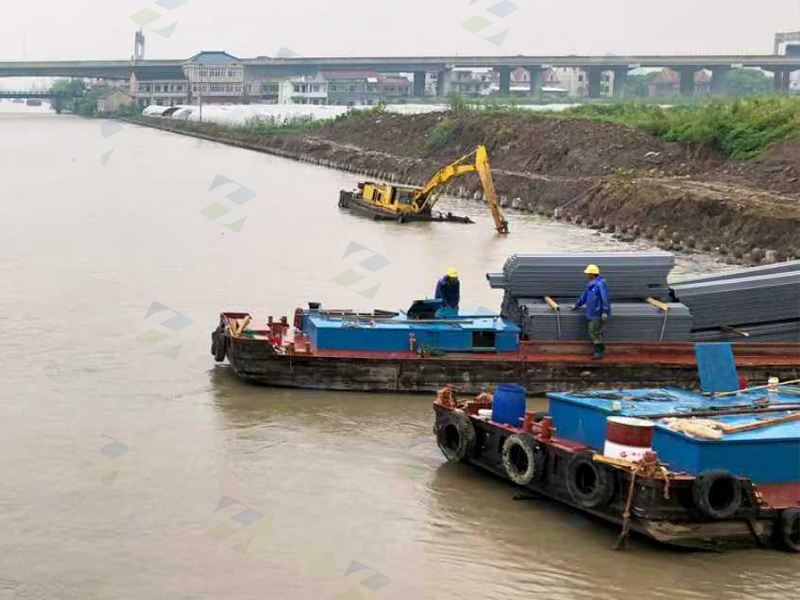
| Installation method | Vibratory hammer or hydraulic press-in equipment, barge-mounted rigs available |
| Anchoring | Compatible with tie-back rod or deadman anchor systems for taller walls |
Water depth, wave exposure, and vessel mooring loads all affect wall sizing, so please share your marine survey or design drawing so we can confirm panel length and thickness.
Application
This wall is designed for permanent marine structures where the wall faces open or semi-open water rather than a contained pond or canal. It is engineered to take wave and current loading in addition to the soil retention duties common to inland sheet pile walls.
- Small craft harbors and marinas: forms the retaining wall along berths and access channels.
- Quay and dock walls: supports loading areas where vessels berth alongside the structure.
- Breakwater and groyne cores: provides an internal vertical barrier within a larger rock or armor unit structure.
- Ferry terminal and boat ramp edges: holds back fill at transition points between land and water.
Because marine works often involve permitting and navigational clearance requirements, we recommend confirming your project's approved layout before finalizing panel quantities.
Advantages
- Saltwater corrosion resistance: maintains section integrity through continuous seawater immersion.
- Stable through tidal cycling: handles repeated wet-dry exposure at the waterline without accelerated deterioration.
- Sealed joint performance: the interlocking profile limits water and fine sediment movement through the wall.
- No marine borer damage: unlike untreated timber, is not subject to attack by marine wood-boring organisms.
- Compatible with tie-back systems: can be combined with anchor rods for taller quay and dock wall heights.
For high wave-energy open coastlines, this wall is typically specified alongside rock armor or breakwater protection rather than as a stand-alone exposed structure.