English
 中文简体
中文简体
Oct 20,2026
Content
- 1 Understanding Vinyl Sheet Pile Material Composition and Properties
- 2 Economic Value and Cost-Benefit Analysis
- 3 Environmental and Health Advantages
- 4 Application Versatility and Project Suitability
- 5 Installation Efficiency and Logistical Advantages
- 6 Performance Durability and Long-Term Value Realization
- 7 Regulatory Compliance and Risk Management Benefits
Vinyl sheet piles represent a transformative innovation in marine construction, shoreline stabilization, and geotechnical engineering, offering unprecedented combinations of durability, cost-effectiveness, and environmental benefits that are reshaping how engineers approach waterfront development and earth retention projects. The economic value extends far beyond simple material cost comparisons, encompassing lifecycle benefits, reduced maintenance requirements, extended service life, and environmental advantages that accumulate to substantial savings throughout project life spans. Understanding the multifaceted value proposition of vinyl sheet piles enables project managers, engineers, and developers to make informed decisions that optimize construction economics while delivering superior performance and environmental responsibility. This comprehensive guide explores every dimension of vinyl sheet pile value, from fundamental material properties and economic advantages through sophisticated engineering applications, environmental benefits, installation efficiencies, and long-term performance characteristics that justify their increasingly prominent role in contemporary waterfront construction and earth retention infrastructure.
Understanding Vinyl Sheet Pile Material Composition and Properties
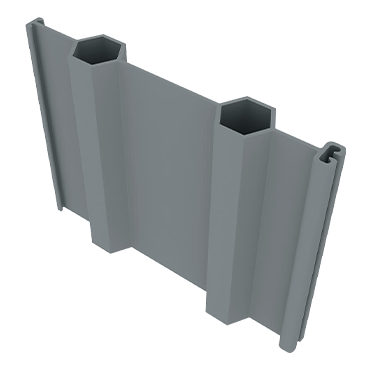
Vinyl sheet piles consist of polyvinyl chloride (PVC) engineered into interlocking sections that drive and seal together to create continuous barriers for water retention, earth stabilization, and structural support in demanding construction environments. The PVC formulation incorporates impact modifiers, stabilizers, and UV absorbers creating materials that maintain structural integrity and flexibility across temperature ranges from -40°C to +60°C, spanning climatic extremes encountered in diverse geographic locations. The polymer's inherent corrosion resistance eliminates the electrochemical degradation that destroys steel sheet piles in aggressive environments including saltwater exposure, sulfide-rich soils, and acidic conditions where traditional materials deteriorate rapidly.
The structural design of vinyl sheet piles incorporates closed or partially-closed profiles providing excellent section moduli for resisting bending moments while minimizing material consumption and construction weight. Interlocking mechanisms employ thumb-latch or finger-joint designs enabling straightforward assembly while creating effective watertight or soil-tight seals without requiring additional sealant materials that might fail prematurely. The modular nature of sheet pile construction enables rapid deployment, straightforward repair or replacement of damaged sections, and flexible adaptation to site-specific conditions without complex engineering modifications or custom fabrication requirements.
The material's lower density compared to steel (approximately 1.4 g/cm³ versus 7.85 g/cm³ for steel) dramatically reduces equipment requirements, transportation costs, and installation labor compared to conventional materials. A crew lifting vinyl sheet piles by hand performs tasks requiring mechanical equipment for steel alternatives, reducing mobilization costs and enabling installation in space-constrained locations inaccessible to heavy machinery. This lightweight characteristic proves particularly valuable in remedial projects where existing structures, utilities, or environmental constraints preclude use of heavy construction equipment.
Economic Value and Cost-Benefit Analysis
The economic value proposition of vinyl sheet piles extends across multiple dimensions including material costs, installation expenses, maintenance requirements, service life, and environmental compliance benefits. Initial material costs typically range 50-100% higher than steel alternatives, a premium that appears substantial until lifecycle analysis incorporates the substantially reduced maintenance and replacement costs characterizing vinyl performance. Steel sheet piles require protective coatings in corrosive environments, periodic coating maintenance or replacement as protective systems degrade, and eventual replacement when corrosion penetrates the steel base material. Vinyl eliminates these ongoing costs while guaranteeing performance throughout extended service life without protective systems or preventive coating maintenance.
Installation efficiencies create additional economic advantages, as vinyl sheet piles install faster than steel alternatives due to reduced weight enabling hand installation in many situations, easier handling through smaller equipment requirements, and simplified quality assurance confirming proper sealing without specialized testing methodologies. The reduced installation time directly translates to lower labor costs and accelerated project schedules enabling earlier revenue generation or facility deployment. Construction sites benefit from simplified logistics, reduced equipment rental costs, and minimized site disruption compared to projects involving heavy machinery and extended installation periods.
Maintenance cost elimination represents a substantial economic benefit, with vinyl sheet piles requiring no protective coatings, no periodic inspections detecting coating degradation, and no preventive maintenance to preserve structural integrity. A steel bulkhead installed in marine environments typically requires costly inspections every 5-10 years followed by expensive recoating or rehabilitation when protective systems degrade. Vinyl eliminates these recurring expenses, providing predictable long-term costs aligned with initial installation investment rather than accumulating maintenance and repair expenditures throughout the structure's life.
| Cost Factor | Vinyl Sheet Piles | Steel Sheet Piles | Comparative Advantage |
| Material Cost | Higher | Lower | Steel advantage |
| Installation Labor | Lower | Higher | Vinyl advantage |
| Equipment Rental | Lower | Higher | Vinyl advantage |
| Protective Coating | None | Required | Vinyl advantage |
| Maintenance Costs | Minimal | Substantial | Vinyl advantage |
| Service Life | 50+ years | 30-50 years | Vinyl advantage |
Environmental and Health Advantages
The environmental value of vinyl sheet piles derives from multiple benefits including elimination of heavy metal contamination risks inherent with steel alternatives, resistance to chemical degradation reducing environmental remediation requirements, and avoidance of protective coating chemicals that pose contamination risks during application, maintenance, and eventual removal. Steel sheet piles require protective coatings that may incorporate heavy metals including zinc, cadmium, or lead depending on environmental application and coating specifications. Coating degradation releases these substances into surrounding water or soil environments, creating environmental contamination and potential bioaccumulation in aquatic ecosystems. Vinyl eliminates these hazards entirely, avoiding environmental contamination risks that characterize conventional materials.
Corrosion resistance in aggressive chemical environments eliminates the need for expensive remediation or equipment replacement when sheet piles encounter unexpectedly severe conditions. Vinyl's tolerance for acidic soils, sulfides, and other aggressive chemical environments enables cost-effective retention in locations where steel alternatives would corrode excessively, requiring premature replacement or protective systems unlikely to succeed in highly aggressive conditions. This environmental tolerance extends environmental advantages by enabling development in challenging locations without requiring extensive site remediation or chemical treatment that might create secondary environmental impacts.
Recyclability considerations distinguish vinyl sheet piles increasingly favorably as environmental awareness drives decisions toward circular economy principles. End-of-life vinyl sheet piles can be ground and recycled into new products including construction materials, playground surfaces, and other applications, maintaining material value rather than depositing them into landfills. The absence of coating contamination ensures that recycled vinyl meets quality standards for new applications, unlike steel alternatives where coating removal and decontamination create expensive, energy-intensive processing requirements.
Application Versatility and Project Suitability
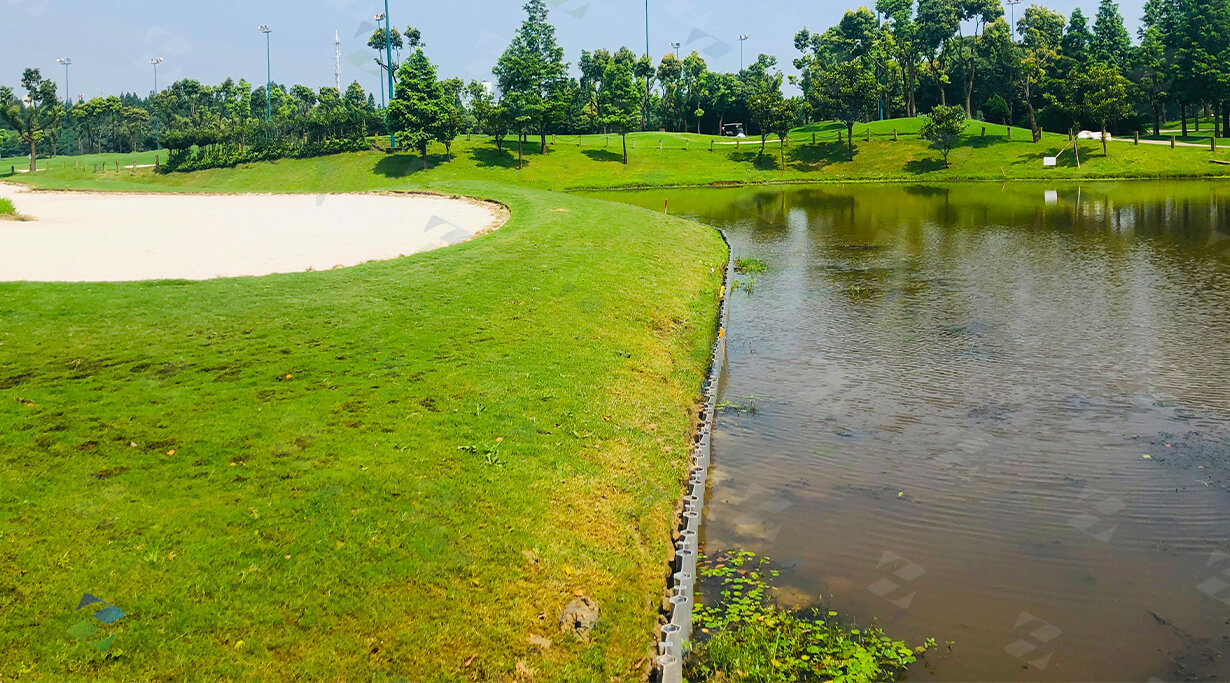
Vinyl sheet piles excel in freshwater, brackish, and saltwater applications spanning retention ponds, canal walls, shoreline stabilization, dock construction, and environmental remediation projects. The material's corrosion resistance in marine environments eliminates the ongoing maintenance demands that characterize steel bulkheads in coastal installations. Small harbors, residential marinas, and aquaculture facilities benefit dramatically from vinyl's corrosion resistance, simplifying long-term facility management and reducing operational costs compared to steel alternatives requiring continuous protective system maintenance.
Landfill and environmental containment applications leverage vinyl's chemical resistance and impermeability, creating effective barriers against leachate migration and groundwater contamination. The environmental value extends beyond infrastructure function, as reducing environmental contamination risk protects ecosystems and public health while potentially reducing regulatory liability and environmental remediation requirements if containment failures occur. Remediation projects employing vinyl sheet piles for groundwater controls or contaminated site confinement benefit from the material's chemical resistance and simplified long-term management requirements.
Temporary and emergency construction applications benefit substantially from vinyl's lightweight and rapid installation characteristics. Flood control emergency barriers can be rapidly deployed using vinyl sheet piles and simple equipment, enabling faster response to flood threats compared to conventional materials requiring extensive preparation, heavy equipment mobilization, and extended installation timelines. Disaster response applications benefit from reduced logistics requirements and simplified installation enabling rapid deployment when time pressures drive project scheduling.
Primary Applications for Vinyl Sheet Piles
- Marine and saltwater shoreline stabilization and dock construction
- Freshwater retention ponds and canal wall construction
- Landfill containment and environmental remediation barriers
- Flood control and emergency waterway containment
- Aquaculture facilities and fish farming operations
- Groundwater control and dewatering systems
- Temporary construction barriers and erosion control
Installation Efficiency and Logistical Advantages
The lightweight nature of vinyl sheet piles enables installation methodologies impossible or impractical with heavier materials, including hand installation in appropriate applications, simplified equipment requirements, and reduced site infrastructure development. Projects in congested urban areas, environmentally sensitive locations, or those with limited equipment access benefit dramatically from vinyl's reduced equipment demands compared to steel alternatives. Smaller equipment reduces traffic impacts, noise pollution, and site disruption compared to heavy machinery essential for steel installation, creating substantial indirect economic and environmental benefits beyond direct construction cost savings.
Installation speed advantages enable faster project completion and earlier facility deployment generating revenue or delivering project benefits. Vinyl sheet piles install approximately 30-50% faster than steel alternatives in many applications, directly translating to reduced overall project duration and associated cost reductions. Accelerated schedules prove particularly valuable in commercial developments where earlier opening generates revenue, seasonal operations benefiting from extended operating periods, and environmental remediation projects where faster completion reduces long-term treatment costs.
Transportation logistics prove simplified compared to steel alternatives, with reduced weight enabling standard highway truck transportation without special permits, reduced trucking costs per unit distance, and simplified equipment coordination. Projects located considerable distances from manufacturing facilities or requiring delivery to remote locations benefit from reduced transportation costs and simplified logistics coordination. The simplified supply chain reduces project complexity and vendor coordination requirements compared to specialized equipment and heavy-lift logistics demanded by steel sheet pile projects.
Performance Durability and Long-Term Value Realization
Vinyl sheet piles demonstrate exceptional long-term durability without protective systems or maintenance interventions, with installations spanning decades remaining structurally sound and functionally intact without significant degradation or performance loss. Historical performance data from vinyl applications installed in the 1980s and 1990s demonstrates longevity approaches or exceeds 50 years, validating initial cost premiums through extended service life eliminating replacement requirements that characterize alternative materials. Economic value accumulates throughout this extended service period as maintenance-free operation reduces overall ownership costs progressively below alternative solutions requiring ongoing protective system maintenance and eventual replacement.
The modular design of sheet pile construction enables selective repair or replacement of damaged sections without requiring complete system replacement or extensive renovation. A damaged vinyl sheet pile can be extracted and replaced with new material, restoring full functionality at minimal cost compared to repair methodologies for alternative materials. This repairability extends long-term value by enabling cost-effective correction of localized damage while maintaining system integrity and operational capability.
Performance predictability and consistency distinguish vinyl sheet piles from materials experiencing significant performance variation based on installation conditions, exposure history, or maintenance quality. Design engineers can confidently specify vinyl knowing that long-term performance will align with material specifications throughout the design life, eliminating uncertainties that characterize alternative materials where performance depends heavily on ongoing maintenance effectiveness. This performance certainty enables optimized designs and reduced design safety factors possible with high-confidence materials.
Regulatory Compliance and Risk Management Benefits
Vinyl sheet piles simplify regulatory compliance in environmental applications through inherent material properties that satisfy stringent requirements without relying on secondary protective systems subject to degradation and failure. Landfill containment requirements, groundwater protection specifications, and environmental remediation standards often favor inert, chemically resistant materials eliminating risks of contamination from protective coatings or material degradation. Regulatory agencies increasingly recognize vinyl's environmental benefits, with some regulations providing preferential treatment or streamlined approval processes for vinyl applications compared to materials with recognized environmental risks.
Long-term liability reduction represents substantial unquantified value in environmental and hazardous-use applications where material failure could create environmental contamination, public health risks, or regulatory liability. Projects employing vinyl sheet piles reduce long-term liability exposure compared to alternatives where protective coating degradation or corrosion could create unforeseen environmental liabilities decades after project completion. This liability mitigation proves particularly valuable in environmental remediation and contaminated site projects where regulatory oversight and liability concerns drive decision-making.
Vinyl sheet piles represent a compelling value proposition extending far beyond simplistic material cost comparisons, encompassing installation efficiencies, maintenance elimination, environmental benefits, and extended service life that collectively deliver economic and functional advantages justifying their increasingly widespread adoption in waterfront construction and earth retention applications. As lifecycle cost analysis becomes standard practice and environmental concerns drive decisions toward sustainable solutions, vinyl sheet piles' multifaceted value proposition positions them as the preferred choice for forward-thinking developers and engineers committed to delivering superior projects that balance economic efficiency with environmental responsibility and long-term performance reliability.