English
 中文简体
中文简体
Oct 20,2026
Content
- 1 What Are Sheet Pile Sections?
- 2 Common Sheet Pile Section Profiles and What They Do
- 3 Steel vs Vinyl Sheet Pile Sections: Real-World Comparison
- 4 How to Select Sheet Pile Sections for Your Project
- 5 Vinyl Sheet Pile Sections: When They Make Sense
- 6 Practical Installation and Design Notes
- 7 Final Recommendation
Specifying a sheet pile section is usually a decision made before the first excavator arrives. The section profile, material, and interlock geometry determine whether a retaining wall or seawall can handle lateral loads, resist corrosive groundwater, and remain serviceable for decades. In our work on small watershed management and anti-seepage projects, we have seen that the fastest way to avoid costly rework is to compare the actual sections against the site conditions, not against a catalog drawing alone. For most bulkhead, seawall, and anti-seepage applications, a vinyl sheet pile section delivers a better balance of corrosion resistance, installation speed, and lifecycle cost than a steel section.
What Are Sheet Pile Sections?
A sheet pile section is a long structural element with an interlocking edge. When several sections are driven into the ground side by side, the interlocks form a continuous wall that resists lateral earth pressure, prevents soil migration, and can create a barrier against water flow. The term “section” refers to the profile geometry, including the width, height, thickness, and interlock shape. These dimensions determine the section modulus and moment of inertia, which are the main values used when checking bending and deflection.
Sheet piles are available in steel, vinyl (PVC), concrete, and timber. Steel sections dominate heavy excavation and deep foundation work because of their high stiffness. Vinyl sheet pile sections, also called plastic sheet piles, have grown in popularity for waterfront walls, bank protection, and ecological retention because they do not corrode in marine or chemically aggressive environments. The key is to match the section geometry to the applied load and to the exposure conditions.
Common Sheet Pile Section Profiles and What They Do
The profile type you choose changes how the wall behaves and how much material you need. A deep, bulky section can resist a larger bending moment but may be harder to drive. A thin, flat section is easier to install but will not handle heavy surcharge loads by itself. The table below summarizes the most common section profiles and their main uses.
| Profile Type | Typical Material | Primary Use | Interlock Style |
|---|---|---|---|
| U-type | Steel | Retaining walls, excavation support, permanent basement walls | Larssen-type integral interlock |
| Z-type | Steel | High bending capacity for deep excavations and heavy earth loads | Overlapping flanges with high section modulus |
| Straight web | Steel | Light-duty retaining, soil mixing, or temporary works | Flat interlock with limited bending resistance |
| Vinyl box or corrugated | PVC | Seawalls, bulkheads, small watershed management, anti-seepage screens | Tongue-and-groove or overlapping profile |
In practice, the installation method matters as much as the profile. If your crew is working in soft estuarine soils, a lightweight vinyl section can be pushed or vibrated in quickly without mobilizing a large rig. If the ground contains cobbles or dense gravel, heavier steel sections may be needed to punch through the obstacle.
Steel vs Vinyl Sheet Pile Sections: Real-World Comparison
The strongest section does not always produce the best wall. In a corrosive environment, steel’s advantage is its bending stiffness; vinyl’s advantage is its longevity without coatings. The decision should be based on the retained soil height, the installed life, and the cost of maintenance.
| Factor | Steel Sheet Pile Sections | Vinyl Sheet Pile Sections |
|---|---|---|
| Weight | Heavy; requires a larger crane and more handling | Lightweight; easier to transport, handle, and install |
| Corrosion behavior | Needs coating, cathodic protection, or increased thickness in marine settings | Resists salts, acids, alkalis, and moisture without re-coating |
| Stiffness | High elastic modulus; small sections can handle big loads | Lower modulus; larger or deeper sections may be needed for the same load |
| Installation | Often requires vibratory hammers with high energy | Drives with lighter equipment; soil jetting is common in soft ground |
| Service life | 25–75 years depending on coating and water quality | 50+ years in many waterfront applications with no exterior maintenance |
| Initial vs lifecycle cost | Lower material cost, higher long-term maintenance cost | Higher upfront cost, but often lower 30-year total cost |
Steel has a higher elastic modulus, so a smaller section can carry a larger moment. But when the soil or water is corrosive, steel requires sacrificial anodes, protective coatings, or additional thickness to achieve the desired service life. Vinyl does not absorb water and resists acids, alkalis, and salts. This makes a vinyl section a practical choice for waterfront bulkheads where steel corrosion is expensive to manage.
However, vinyl sections have lower bending stiffness. For heavy earth retention in deep foundations, steel or composite systems may still be required. For moderate loads, vinyl can meet the same safety factor through a deeper profile or a more efficient interlock design.
How to Select Sheet Pile Sections for Your Project
Selection should follow a logical path from soil conditions to equipment and cost. Use this checklist to avoid common procurement mistakes.
- Determine the retained height and soil parameters. The active earth pressure depends on the soil unit weight, friction angle, and surcharge. A short, light section may pass a simple hand calculation but still rotate or deflect too much under a heavy surcharge load.
- Define the exposure and groundwater chemistry. Seawater, acidic runoff, and sulfates all attack steel at different rates. If the site is in a tidal zone or near a marina, vinyl sections remove most corrosion risk.
- Match the section to your installation equipment. Lightweight vinyl sections can be pushed or vibrated into soft soils with a small excavator. Dense gravel, cobbles, or weathered rock often require steel and a high-energy hammer.
- Check the interlock tolerance and sealing performance. A gap in the interlock allows soil loss, which can create settlement behind the wall. Ask your supplier for interlock gap measurements and for the connection depth between adjacent sections.
- Calculate the full lifecycle cost. Include procurement, transport, driving time, coating, repair, and replacement. In many bulkhead and seawall projects, vinyl shows a lower total cost when maintenance is included.
- Verify the supplier’s production and quality control. Confirm that the factory controls section thickness, interlock geometry, and raw material consistency. A reliable supplier should be able to produce a factory quality report and the relevant test records for the section profile.
The most common selection error is ignoring the installation method. A profile that looks good on paper may be impossible to drive with the equipment you already own. Always compare the required driving energy to the available hammer capacity before you make a purchase decision.
Vinyl Sheet Pile Sections: When They Make Sense
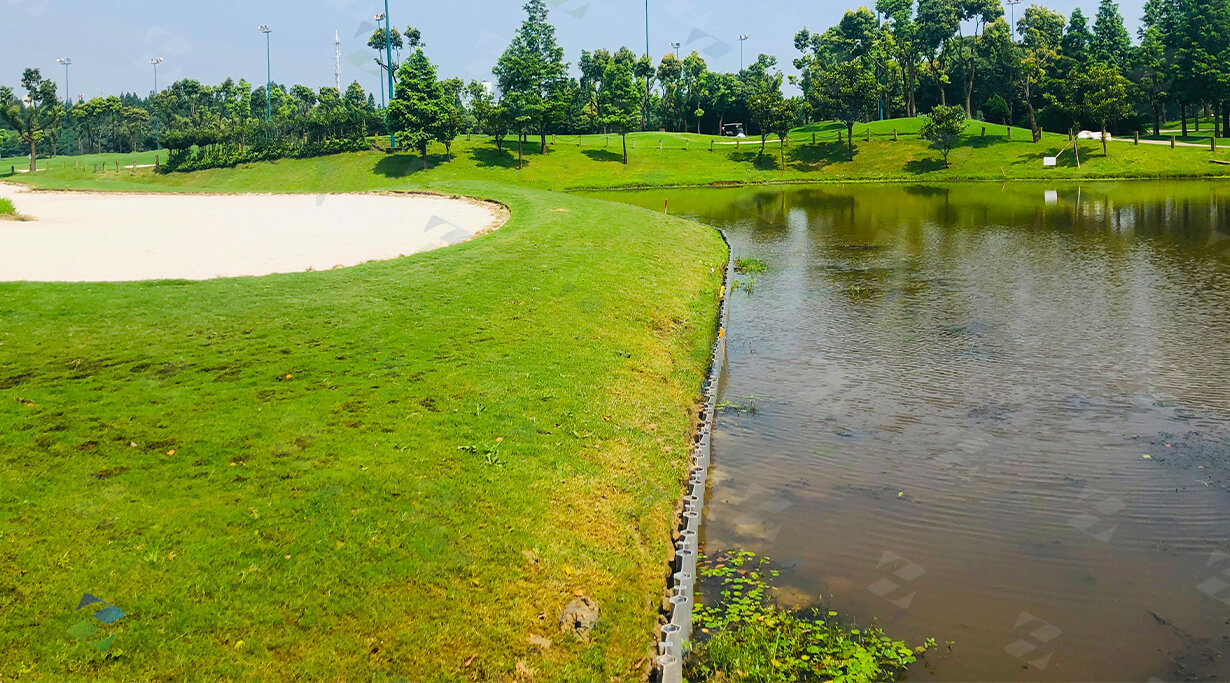
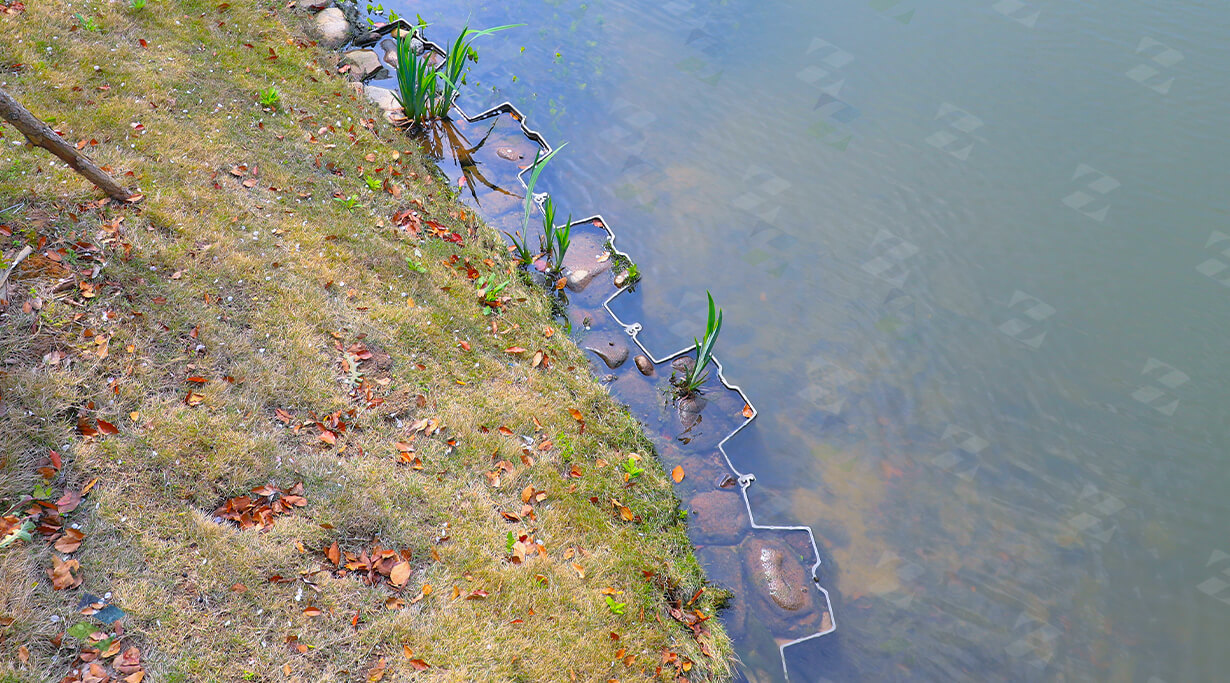
Vinyl sheet pile sections have earned a solid reputation in coastal and river engineering. They are especially useful when the designer needs a long service life without the cost of a protective coating system or a cathodic protection circuit. For small watershed management, canal lining, and eco-friendly bank protection, the light weight of vinyl sections reduces the number of site personnel and the size of the driving equipment.
In our own manufacturing facility, we produce vinyl sheet pile sections with a full line of extruded profiles. The sections are tested in a dedicated product laboratory, and the factory uses a solar energy system for all production power. This means your project can specify a section that is chemically resistant, UV-stabilized, and delivered with a consistent interlock profile.
Practical Installation and Design Notes
Sheet pile sections are not all interchangeable. The interlock must be compatible with the corner section and with the wall alignment. For a vinyl wall, do not over-drive the sections after they have reached the design depth, because the PVC material has a lower impact resistance than steel. Instead, stop when the top elevation is reached and use a cap or a guide beam to hold the line.
Watertightness is rarely achieved by the interlock alone. In applications where seepage must be minimized, install a sealant in the interlock or use a filter fabric on the back of the wall. The section modulus of the profile should be checked against the actual bending moment, and the design should include a safety factor of at least 2.0 for permanent waterfront walls.
When a project involves both steel and vinyl sheet piles, never mix them in the same wall because the interlock geometries and driving tolerance are not compatible. If you are upgrading an existing steel wall, use a transition pile or a concrete cap to connect the two systems.
Final Recommendation
Start with the site’s soil and exposure conditions, then narrow the selection to one or two sheet pile section profiles that actually fit the machine and labor you will have on site. For coastal or river exposures where corrosion is a real concern, a vinyl sheet pile section offers a clean, low-maintenance path. For deep excavations with heavy loads, steel may still be the right answer. In either case, ask for the section properties, interlock tolerances, and quality records before you approve the drawing.